Pasquale Gazillo Jr, Electrician Mate and Port Agent (MFOW)
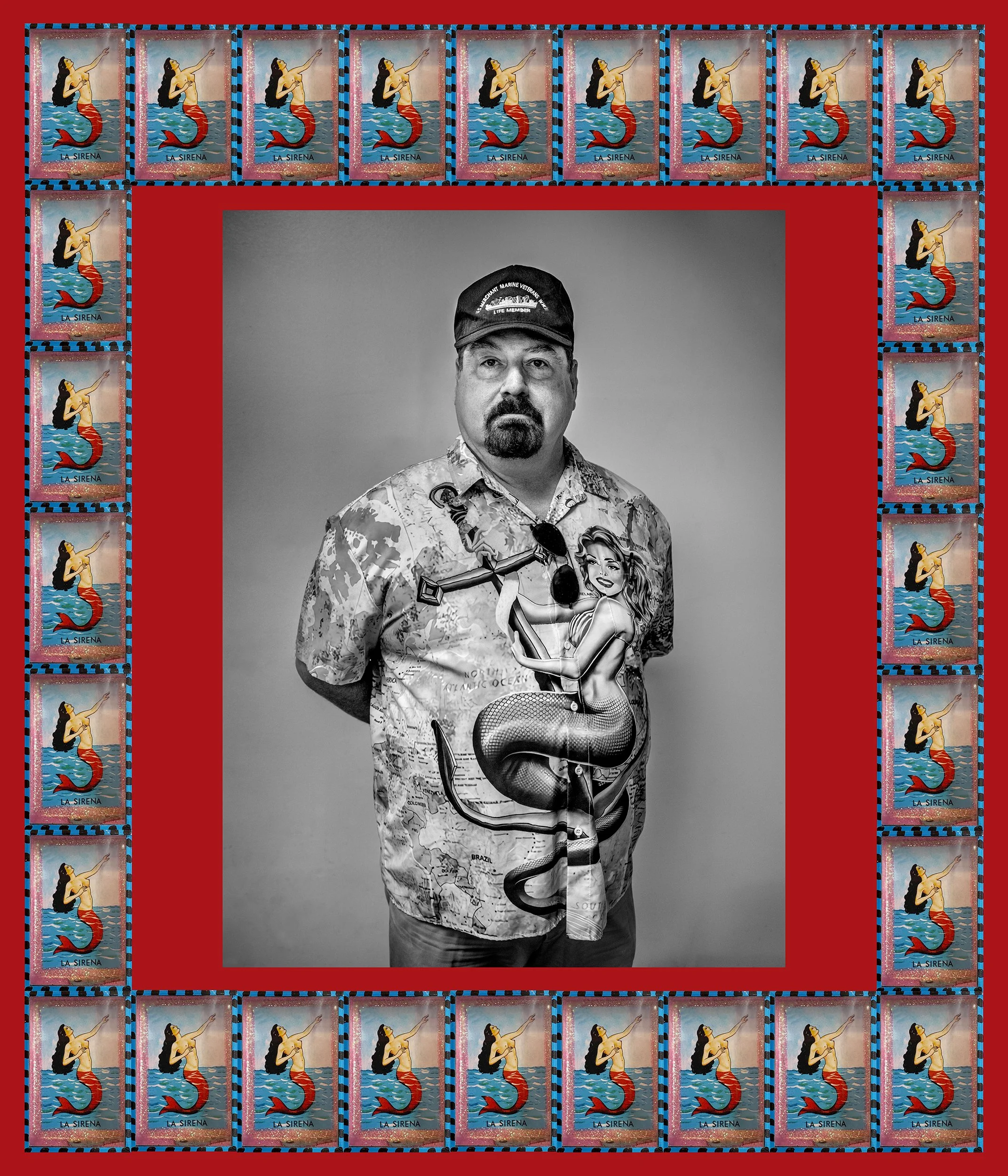
Pasquale Gazillo Jr, Electrician Mate and Wilmington Port Agent. Marine Firemen, Oilers, Watertenders and Wipers Association (MFOW). MFOW hiring hall, Wilmington, California 12 March, 2026
“My grandfather was a coal miner, so I'm actually third-generation labor, second-generation merchant marine. And when I was young, I didn't really understand my father when he shipped out. But now that I’ve shipped out I give him a whole new respect.
We wanted to sail. That's what we did. We sailed on ships.”
My name is Pasquale Michael Gazzillo Jr. and I’m with the MFOW. So we work in the engine room.
..
When I first joined - or actually before that, when my father was in in the SUP (Sailors Union of the Pacific) - they called the engine department the black gang. Back then there was mostly boiler fired vessels and they would have ratings like “coal passer”. When they get done with their watch they'd all have soot from the coal because they'd been shoveling to keep the fires going in the boiler. Later on they changed over to Bunker C (fuel oil), which is a sludge-like substance. I came on during that time.
..
When I was on watch I had to change the purifier fuel filters three, four times in a four-hour period. Then on top of that, if it was a roof-fired boiler, I had to punch carbon two or three times a watch.
Anytime I’d get on the ship I'd have to “MacGyver” a long piece of roll stock with a butter knife. I'd go to the boiler front, making sure I had my shield and a vest because it gets up to about 750 degrees. When you do that you hear this rush of hot air. I'm there with my gloves and my carbon puncher, punching away at all the tendrils of carbon that build up around the boiler diffuser that diffuses the fuel, the air, and the heat, for a proper burn.
Sometimes it just gets built up because the fuel we take on isn't that good - the quality isn't that good. Hence why we have to change out the purifier strainer so many times. You’d have to do thisthree or four times, depending on the weather. If we run into some rough weather that loosens up the debris that's on the bottom of the fuel tanks. When it goes into the purifier, it starts plugging up. It goes to the strainer, and that's when I have to switch over. Bleed it out. Bleed out the one that's on the offline. Make sure it's safe to open up. Take that filter out, put a new filter in, close it, and then switch it back. I'd rather switch it back on a brand new filter and then go back to the old one. So it kind of keeps it where it's always on a fresh, clean strainer.
..
My dad's generation did coal. He’s since passed away and there's some insurance company that sends checks. I got the last one about 10 years ago.
Back then there were so many shipping companies. He was fighting for all these settlements, being on the ship and having to deal with health problems due to the vessel's operation. And one of them was black lung.
My grandfather was a coal miner, so I'm actually third-generation labor, second-generation merchant marine. When I was young I didn't really understand my father when he shipped out. But now that I’ve shipped out I give him a whole new respect. Now I know what he went through just to make sure that I was okay even though he wasn't around physically.
He would ship out between six to eight months at a time. Since my mother passed away when I was three I was property of the state - they sent me to foster homes.
When people ask me “Where were you raised?”, I say around LA. That would either be in Glendale, Huntington Beach, Los Angeles City - the City of Angels.
Yeah, I was in foster care until I was 16. Then people wouldn’t want me ‘cos I was too old, and I'd have to live with guardians. They were pretty strict, especially just before 18. They wanted me out the house to look for a job.
I went to adult ed, and I got my GED. After I got my GED, then I volunteered for the Army. That was in ‘85, and I was in a delayed entry program. I spent five years in the Army, and got out.
I did a bunch of “Hey Joe” jobs, and security work because of my Military Occupation and Service (MOS). I was 11B infantry, that’s what gave me discipline. That's what gave me structure. So anything that came up, I didn't say, “Oh, I can't do it.” No, I went in there and let's see what we can do.
..
Things weren’t working out. My wife ran off with a one-legged Salvadoran.
I know it sounds weird, but all during their relationship he was in a coma because his cousin shot him in the stomach. There was somehow a blood clot in his leg, and they had to amputate. After eight months he wakes up from the coma, and the first thing he says is my wife's name.
So, she starts disappearing days at a time. Then my mother-in-law calls up and says, we need to talk. Then that was it.
..
I had a job as a security guard paying $3.50 an hour. I couldn't afford to have a family. I was young, 22 at the time. So I had all my paperwork ready to go back into the service, and my father knocks on the door and he says we got this thing going on in the Gulf - the first Gulf War - why don't you try that before going back in the army.
So I went to SUP. At the time they were having job calls on Saturday, the same time I had to do my [reserve Army] obligations. I went down there in my battle dress uniform and I talked to Bill Berger, who was the port agent for SUP at the time, and I signed up with him.
For the next couple of months, I didn't ship out. I was getting more work with the other union, MFOW. So I come in one day to get my check for working as a standby wiper, and Bill Berger says in a gruff voice, “If you like work with MFOW so much, why don't you join them’?” Both of the offices were together and I look over to Saul Lube, the port agent for MFOW, and I says, “You think I could join your union?”. He flips over the paper, cigarette dangling from his mouth, and he said, “Sure kid, come on in tomorrow. We'll get the paperwork going”.
Three months after that I got my first ship. It's was a Matson ship, and at the time they were taking the circus over to Honolulu.
So, I’m nervous, I don't know what to do, and I was waiting for the ship to come in. There was a couple other guys, a watch standing junior, and a second electrician, and I knew them both.
In fact, one guy, Tom Davis, he's living in my house right now in Vegas. He's a retiree. He did 25 years. He brought his wife over from the PI so he's doing well. I just want to make sure he's taken care of because we've been good shipmates for 35 years now.
The first thing they asked me to do is monitor the HFO (heavy fuel oil) manifold, make sure there's no leaks. We're taking on bunker C - heavy fuel oil - and it's taking forever because the chief, he likes to press the tanks, which is illegal now. But this chief just wanted to make sure he gets every last tank full to the top. It's really tedious, you're just staring at the manifold, and you're looking out at the at the port, all the refineries going. You see the fire that's burning residual stuff from their products, and it sort of reminded me of Blade Runner.
It’s 15 hours of bunkering, and I was zoned out after that was done. I went to the engine room (for the) 0800 muster (where) they’re starting to dole out jobs to all the day workers.
The watch standards, they did their rounds and soundings, make sure everything's all good with the watch. Make sure that the licensed engineers get their numbers to put in the logbook.
Me, I just cleaned. That was it. When you're a wiper the acronym of ABC is, “Always Be Cleaning”.
So we got out to sea. I was seasick very bad. I was reading in this magazine, the Smithsonian, about how Norwegian sailors would chew on ginger root to calm their seasickness. So I went to the steward, and asked for some ginger. He gave me a ginger root, and I bit it - oh, shit, my whole mouth was on fire.
There's got to be a better way. I saw these ginger root capsules, and I started taking that, and it went away. I did that for about three years and then I finally got my sea legs.
..
I liked that ship even though the chief engineer was definitely a boozer. I didn't see him until the second voyage. When I talked to the chief electrician, he says you won't see him on his first voyage, and you won't see him on the last voyage.
But he had a mean streak on him. The reason how I got that job was he fired two people in Maui - the wiper and the second electrician, so they were sailing short-handed. That's why they needed somebody right away, and I just happened to be at the hall.
When I was at the union hall looking for work, I was there when the port agent opened the door to go in, and I was there when the port agent left. And sometimes he'd be there from 6:30 in the morning until 1500, 1530. But I wanted to ship out. I just wanted to get away. And I did. I shipped out.
..
I’m making good money. I wanted to buy cars, and I bought five. I mean they weren't brand new, and after a while it's like why do I need all these cars? I'm shipping out.
I was listening to my father. Listening to his shipmates saying this is a dying industry kid, maybe you got 10, 15 years. Have a good time, but squirrel some money away for investments. So that's what I was doing for the past 35 years. That's why I have my house in Vegas, and I've got properties in Colorado, where I have relatives.
This is the autumn years of my sailing. After 35 years I'm passing the torch on to people that are younger, and giving them a chance to work.
..
The port agent told me when I got off that first ship, he says, look you're making good money, but you've got to keep improving yourself. I want to see some endorsements on your merchant marine credential. I'm giving you two years. That’s per the constitution and the bylaws that we abide in this union, if you don't improve yourself in two years you got to get out of the union.
So, we're getting close to two years and I'm thinking, geez, I haven't come close to getting my endorsements.
I stopped at union hall to pick up a standby check, and the port agent says they got a class over in Piney Point. It's 11 weeks. You go there, you'll study, you'll get your QMED, Qualified Member Engine Department, and you'll have all your NA ratings.
So I went to Piney Point, Maryland. I was there for 11 weeks. On the weekends I would study. Sometimes they would have small sailboats go by, and I'd go crabbing with them and look for the blue soft-shell crabs.
They only gave me $10 a day for allowance. So I had $70 (for the week). When I did get the check on Friday I'd go to Evan's Crab Shack - $12 for all the clams, crabs, and corn you could eat. That was my guilty pleasure, my indulgence.
The rest of the time, Piney Point had their own mess hall, and it was great because they were teaching not only people for engine department, but stewards department as well. At the time they were really strict when it came to making sure that the food was done properly.
Nowadays everything's just out of the freezer. They throw it in the microwave, or throw it in the oven. There's no care. If you get a Chief Steward that actually cares and wants to cook, they're amazing.
But if not, then it's the same stuff with all these preservatives. I feel that's why there's a lot of health problems going on, especially with obesity. We're not getting the proper food, or nutrients on the ship.
In the end it's going to affect how we work. You know, an army marches on its belly. It should be the same thing on a ship.
..
When we're at sea we work four hours, and we're off eight. When we're on port watches it's eight and sixteen. So you work eight hours and you're off sixteen. I took shuttle runs that go to Hong Kong, Laem Chabang (Thailand), Singapore. Watch juniors would ask me if I would cover their watch, I told them the going rate for me to stand your watch is 300 bucks.
Even though I liked going to those places, and had a good time, I still had to keep within my budget. With them, they were just spending like drunken sailors - you know just what we usually do.
With me I kind of had it in the back of my mind that I should be a little more frugal, and listen to my father and the old salts. I think I did a good call.
..
One time a guy missed a ship, so we sailed short. After doing his watch we had to switch to 12 and 12 until we got a relief. We did that for about a week and we picked up another junior while we were in Naha, Okinawa. Another good place to go.
We used to spend overnight in Naha. We’d to go to this area called Soapy Land, and you know, they'll have the girls that you pick out through a catalog. And when you go in there, they just take care of everything. They wash you. That's why it's soapy land, head to toe. When you come out of there, you're like squeaky clean and you feel great. And a lot of other stuff goes on too, not just washing.
..
First and foremost, when I joined the Merchant Marines, I wanted to sail. Most of the guys around me, any time a ship came up they wouldn't take it. But they were there for months, and then after somebody filled the job they’d start complaining, “I need to ship out. I got to ship out” You had your chance. What happened?
There's been times most the ships I go on are ships that are a problem - the plant’s messed up, or the way that the engine rooms being run. Other times it's the license.
Sometimes the engineers can be a problem - they’re not very good when it comes to managing people. I kept getting on those ships and whatever they say, I'll say I'll do the best I can. That's it. I'm not going to get into an argument.
You get some engineers that are screamers. They think if they scream, they could get stuff done. And I told one of them, it doesn't matter how loud you scream, it's still the same.
..
I was a delegate (elected shipboard MFOW rep) when I was a junior member. Usually that goes to book members, but none of the book members wanted the headache.
So as soon as I come on board the ship, they're slapping me on my back saying, “Hey, delegate, how you doing?”
Anytime there's a beef I have to go in front of the chief engineer, and if I can't get that resolved, then it's in front of the captain.
All the while, I'm writing out notes. This was before email. I had to write out a note, and go to the first mailbox, most of time I’d go to a military post. Naha, Okinawa, was Camp Kinser Marine Base. I’d usually go there to drop off the mail, and I'd probably get a haircut, and look at all the stuff at the PX. Being a merchant marine, we couldn't buy cigarettes or booze on post, but we could buy other stuff.
I becamea delegate because nobody else wanted to. It's the same reason that tomorrow I become port agent, even though I'm taking over a 50% pay cut. My last ship was August of last year on a Matson ship called the DKI (Daniel Kevin Inouye). And my payoff there, gross, for a 35-day trip was $23,500 for 35 days. When I'm Port Agent tomorrow, I'll make, at the most, $1,300 a week. So that's going to be over $5,000 a month, maybe less. I don't know, my math is a little off.
I'll do it for one term, and I'm going to retire. After that hopefully somebody else will take over. But even though I say that, a lot of times my conscience gets the best of me and says, all right, I'll stay if you guys want me to stay.
..
I think I've been institutionalized since I was three years old. Always moving around. I’ve either been property of the state, property of the government, or now being in the union - “institutionalized” just keeps coming up because it's something that I'm used to doing.
I’m a very different man now from that first trip, which was a lower triangle run - Long Beach, Hano, Oakland, and then back to Long Beach. Then, a lot of times after I got done doing my overtime as a wiper - usually the 1800 to 2200 [watch] - I'd be in my quarters, and I'm thinking I wish I could go somewhere else besides these places. I want to go around the world, anywhere.
Then sitting down with the old-timers there sailing, with them they're happy to do that run. When you go on other runs - like the China shuttle - you have time changes. You have the weather. You've got to deal with foreigners. To them, they had their fun. All they want to do now is the rest of their time and retire.
..
Some of them can't retire because of medical reasons. Once you retire you lose the medical you get from the union. You got to go out and find your own. Nowadays they worked out a deal where when you're vested after 25 years, you'll be able to get on a good plan.
Since I'm a veteran I'll be able to go to the VA hospital, too. I've been talking to all the old-timers that have retired in the past couple years - for instance my friend that's in Vegas. I'm kind of watching him and seeing how he does it so I don't fall into the same potholes.
..
Now I have to budget myself. I can't go out and spend a lot of money like I used to because I don't get paid that much.
My uncle, my aunts and my father, all of them were raised during the Depression. They would always say you should do this, you should do that, you shouldn't spend on something frivolous. Now I understand. Now in my golden years when I go shopping and I see something, and I think back to what my uncle would say, “Where's that going to be in a year? Are you going to use it? Or is it just going to collect dust in the garage?” So a lot of things I could have spent on, but don’t. I keep a reserve.
Nowadays, with the economy, I'm cooking. I don't go out to restaurants or fast food. My friend, the other day he ordered something from DoorDash. They like deliver food to you, and just for three people it was like 150 bucks!
With me, I just I go to Costco. I get stuff in bulk and I cook whenever I can. Right now, as of tomorrow [when I officially become Port Agent], I've got to be good.
I even stopped drinking. I told myself during Lent, even though I'm not a practicing Roman Catholic, there are times that give me a reason to dry up. You know, I want to have a clear head when I get in the office.
..
But, yeah, it's changed quite a bit since I was a young man. When I was a young man, I'd wake up at 7:15 in the morning, roll out of bed, jump into my coveralls, and run down to the engine room.
Now, like on my last ship, I’d wake up at 6 in the morning. I'm staring at the ceiling, hear the alarm go off, hit snooze about three, four times until it's like, “All right I gotta get up”.
Then I go through the same routine of the Gold Bond powder, because of the heat in the engine room, and the Tiger Balm for all my joints. For the past few years my joints have just been stiffening up.
..
As soon as I got my endorsements from Piney Point there was no year that I didn't ship under 200 days a year, for at least 20 years. After that I've been on shuttle runs that they couldn't get a relief. The most I shipped in one year was 319 days.
I had an accident on one of the APL ships and that kind of put me not in traction, but I wasn't fit for duty for at least four months. That seemed like a lifetime.
..
It's not like I was stuck on the ship for that time. Sometimes (in port) you have enough time to go do stuff that you want to do. I was on one grey hull (naval) ship and the captain was an avid scuba diver. He arranged something with the higher ups to stop in Palau. And Palau is like the best place for scuba diving, snorkeling and kayaking.
I think that was the last time that I had a good run. A good ship, a good crew. It was just amazing. That's what's on my business card - a picture of me at this bar, I think it was some kind of scuba diving terminology, like the Bottom Time Bar.
..
When you get to Palau, usually there's a launch because we couldn't dock. In fact, most of the grey hull ships you can't dock. The only time that I docked on a grey hull ship was in Pusan, Korea. But the other times, the ports don't want you because you got live ammunition. It's more of a safety concern.
I talkedto the chief engineer when I was on the USNS Martin. He says if you do so many days of overtime we'll put that on your book, and “we” can use that for a day off. We were there for five days, so I did about a week of overtime. I wasn't getting paid but I had like three days off to go in Palau. I didn't eat on board the ship the whole time when I was there.
During those five days I was in Palau I could have been like the other sailors and spent at least a couple grand, I spent $800. But I had a great time.
Usually when I go to those bars - they call them “buy-me-drinky” bars - you get the girls there. With me, I just like the conversation.
As long as they're talking to me, that's good enough. But then when they start, “Oh let's go here, let's go to the room up there”, then we start haggling about the prices. I’ll say, “I don't know if I can do that. How about I'll do it if there's two girls. No? Well then maybe instead of 50, then you should give me a rate of 30.”
And we just go back and forth. In the end I don't really go with them. I'll just go with somebody else until I get tired of talking, which hardly happens.
When you're on the ship you just see the same people, and it's the same conversation. But then when you're out there and you're just walking around, just talking to anybody would be great.
..
So sometimes I feel like I'm God's lonely man. I do what I can. If I see somebody that needs help, I help them out.
Point in case with the port agent's job. It's like the port agent that's there now, he wants to retire. He's been doing this for 10 years. He's always complaining about not getting paid enough, and always yelling at the members.
Being a union official, you have to take care of your people. You've got to take care of the members because without them, without unions…. I've stood in picket lines before with other unions, longshoremen, and Communication Workers of America. Even the nurses over at the Memorial Hospital.
I go see the picket captain, and I sign my name. And it says I'm with MFOW. I'm just going to be here to walk with you guys and make sure that everything is safe and do what's right.
All the way back to ’83 when I was a kid, when SUP was striking with APL, my father brought me to the first rally. That's what first got me started.
When I was in the Army I wasn't really political, until I got into the union. I found out what union rights are, what labor is about. It kind of opened my eyes being in the union.
When I went to headquarters I’d look at the archives. I've seen in the past when there was a beef, the company was starving us into submission, which is kind of sad.
I guess there just wasn't enough people at the time to build momentum so we could be recognized as not just a union, but a labor force to make everybody's life better. You know, not just hooray for me and screw everybody else.
But now it just seems it's changed again. I think we're going into a slump. I'm trying to get people into the union, even if it's not my union.
Guys that are on this ship that don't like being a merchant marine, I say try the longshoremen. Try the electrical workers. Try something that you like to do. You know, just because you ship out doesn't mean you have to like shipping out. Most people just like it for the money.
But with me it was more of going to different places. Meeting people and doing things I normally wouldn't do.
I have one cousin that was born, raised, and will probably die in his town. But with me it's like I always wanted to move around.
And then shipping out, it just gets in your blood.
..
Pasquale Gazillo Jr, Electrician Mate and Port Agent (MFOW)
…
Photo: Robert Gumpert
Transcription: Michele Colyer