From the MM&P Hiring Hall: Kevin Newby, Chief Mate
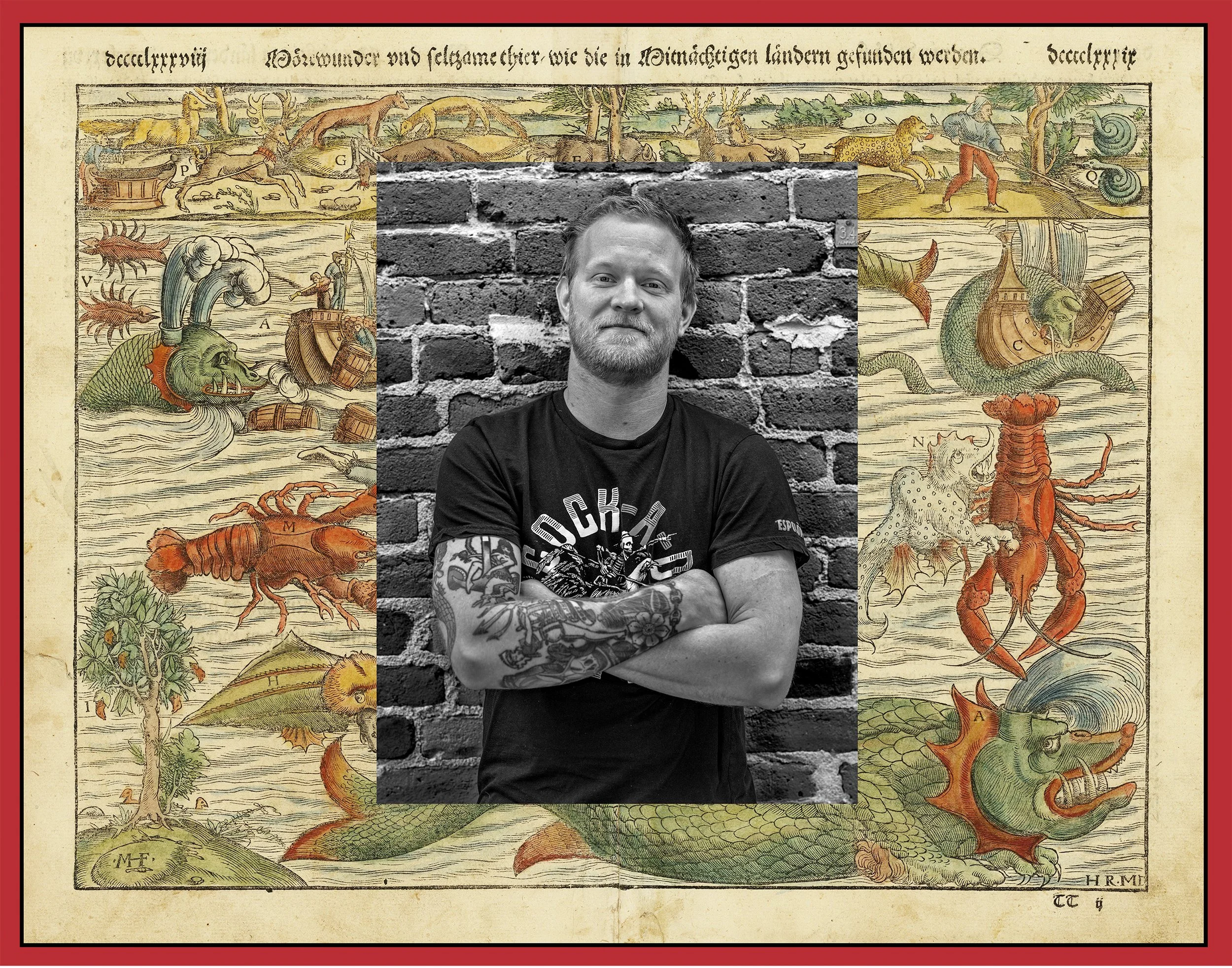
Kevin Newby, Chief Mate on a RoRo
At the MM&P hiring hall. Oakland, California
I’m a Chief Mate. [On being employed by the company], it’s called a permanent officer, the top four - the Chief Mate, the Captain, the First Assistant Engineer, and the Chief Engineer on all the U.S. ships, they’re employed per the union, but they’re hired as a permanent officer on board the ship so that there is some continuity when you get off and on.
I work on a car ship, roll on roll off (a roro). I’m actually on a “tramp” ship, so I don’t have a set route. I just got back from an Australia run, but normally she does east coast Japan, west coast of the United States.
..
[Why I sail], so I actually took a family vacation down to the Caribbean, and I feel in love with going out to sea. I wanted to work on sail boats, so I looked up colleges that had a sailing degree. I lived in Colorado so there was some disconnect between what sailing meant, and what sailing meant.
I ended up going to California Maritime Academy to check it out, see what it was, and I switched from wanting to be a sailboat captain, to the industrial side after my commercial cruise. I enjoyed the aspect of commercial sailing more than being on a sailboat. I think it had to do with dealing with people. If I was a sailboat guy I’d probably be cruise ships, or day boats with passengers, and didn’t really want to get into the service industry part. So, I shifted more towards the commercial side.
..
I very much like being on the sea. I like the solace. You’re siting on a ship out in the middle of the ocean, there’s nothing else around you, it’s just you. It’s very relaxing, for me being out there.
..
There’s not too many jobs out there where you work three months on, and then you get three months of vacation. I like that aspect of it.
I like to travel, so I go to Japan and Italy, my two favorite countries. I fly, I do like taking cruises, but it’s too long to get over there. And my family lives all over the country, so I try to visit my family.
(But) sometimes, like this last time I was off I had to take five months of vacation to allow the other guy to get acclimated to the ship, at about month four, month five, I was very much ready to get back out there.
..
I really like the car carrier dock in Nagoya (Japan). It’s a really pretty pilotage coming up through the channel there.
It’s pretty small, but there’s a Legoland you can walk to, and downtown you can walk to.
Normally car carriers have very fast turnover, we’re only in port for six to eight hours. But Nagoya is like the head port for NYK (Nippon Yusen Kabushiki Kaisha Japanese shipping line), and they let us sit there overnight. So, we get a little bit more time off in Nagoya.
..
The ship I’m working on is the Green Wave, and six months before she was built they built another car carrier called the Green Ocean. They’re built with the same plans, they’re built at the same shipyard. They’re only six months apart, but both ships definitely have their own personality in which what likes to break when. Even sailing on one verses the other, she just feels different. And I don’t know if it’s because the ship has the personality, or the crew.
..
The loading and unloading process (on a roro), they have set speed limits and they do a pretty good job of staying within those limits, but if you’re just walking, a car going 15 miles an hour in an enclosed space is pretty fast.
They definitely like to hit things. It’s like a big parking garage, and some of them like to turn too fast when they’re taking the ramps and they hit the sides of the ramps. And we can raise our decks, so you have to be careful about driving off the edge of the deck - which should never happen, but happens more than you would think.
We carry military cargo on board. A lot of the military cargo has seen war and things fall off of it. They leak all the time, and you need heavier lashing chain to keep some of the larger military equipment down, and not many people know how to use it - so making sure it’s lashed down correctly so it is pretty important.
..
Whichever port’s longshoremen, they have gangs - they have set amounts of people that get into the car and pull it away from all the other cars. Then they have different people that get into those cars and drive them off the ship.
So the longshoremen is responsible for getting them on and off. Then we have a tally company - mostly the Japanese loading side - they kind of make sure where the cars are going to once they leave the ship, and where the cars are going to once they get on our ship. They’re in charge of that.
..
I’ve worked for this company for probably about six years, and I’ve only heard about them going to China once, which is good. I don’t like dealing with the Chinese fishing fleets.
The Chinese fishing fleets, there’s just a lot of them. You’ll come up to them, and at night you’ll just see a glow on the horizon. Usually it takes about two hours to actually see them, there’s thousands, and thousands, and thousands of them.
They’re just there, and it’s annoying because you have to avoid them, and they don’t care. So, they’re trying to get in your way, your trying not to get in their way, it’s just a lot.
..
My ship, we’re a forward house ship - where we stand watch and drive the ship is much, much farther forward. Most of the box boats now a days are not forward house. The tankers and all the box boats we have now are aft house, so they see more of the ship which helps if you are maneuvering the ship, you can see the ship move. It kind of helps you visualize what’s happening with the ship’s motion. You don’t really have that if you are far up forward.
..
We are a floating parking garage, so we’re a giant sail. I mean it’s a giant piece of metal that’s sticking 150 feet out of the water. When it gets windy we keel over. The wind affects us much, much more than the current does. Most ships the current would affect them, but the wind affects us more, which is annoying.
..
I can definitely see some tanker people thinking they’re better by working on tankers. Maybe the LNG group, they might think they’re a little bit better. As far as everybody I know who works on the box boats, and the car ships, there’s no real [hierarchy]. If I go, “I’m a Captain of a car ship”, it doesn’t make you more important than a Captain on a box boat.
..
Most countries, and most ports have a seaman’s club that they [mariners] can go to. Down in Australia they have the best seaman’s clubs that I know of.
When you go to the seaman’s clubs, ‘cause they often offer free rides to and from the ship, you’ll run into different sailors from different countries.
A lot of the times they don’t speak English. Or don’t speak English very well, and I don’t know how to speak any other country’s language. But every now and then you do get some that do like to talk, and they like to ask where we go, what ports we end going to.
I don’t know what it’s like sailing foreign but from what I understand it’s probably not as great as sailing American which has better amenities on the ship. But it is interesting because they are pretty much like every US sailor that I have meet. The foreign guys are the same.
..
They do not charge us for laundry. I don’t know if it’s in our contract, but it’s definitely in the unlicensed contract, certain amenities that they (owners) are required to have for free. Laundry is one of them. Food service. No one uses VHS anymore, but VHS tapes are in the contract. Obviously we’ve used some assumptions, and now it’s streaming services. Our internet is free onboard the ships.
..
I do [get tattoos in other countries]. It’s what I like to do. If I get time, I’ll go and do a walk-in tattoo. Because tattoos are getting more and more popular, if I know I have enough time in port I get in contact with them (the tattoo parlor) ahead of time, email or instagram, and then I’ll talk with them. Normally if I do get time off in port, it’s only like three or four hours and getting a tattoo is going to be half of that, or more.
I was going to do (tattoo) both sides, but then I thought it’d just be fun to do one side of my body. So now I’m only going to do one side of my body.
They’re all, that’s not true, maybe 80 or 90 percent of them, are all Sailor Jerry (from the themes of Norman Keith Collins, a.k.a. Sailor Jerry: January 14, 1911 – June 12, 1973*), heavy inked style. But there are some that don’t have anything to do with sailing.
Kevin Newby, First Mate. 2 November 2025
..
Photo: Robert Gumpert
*Sailor Jerry Tattoo - The History and Innovation that Shaped Today’s Tattooing Traditions