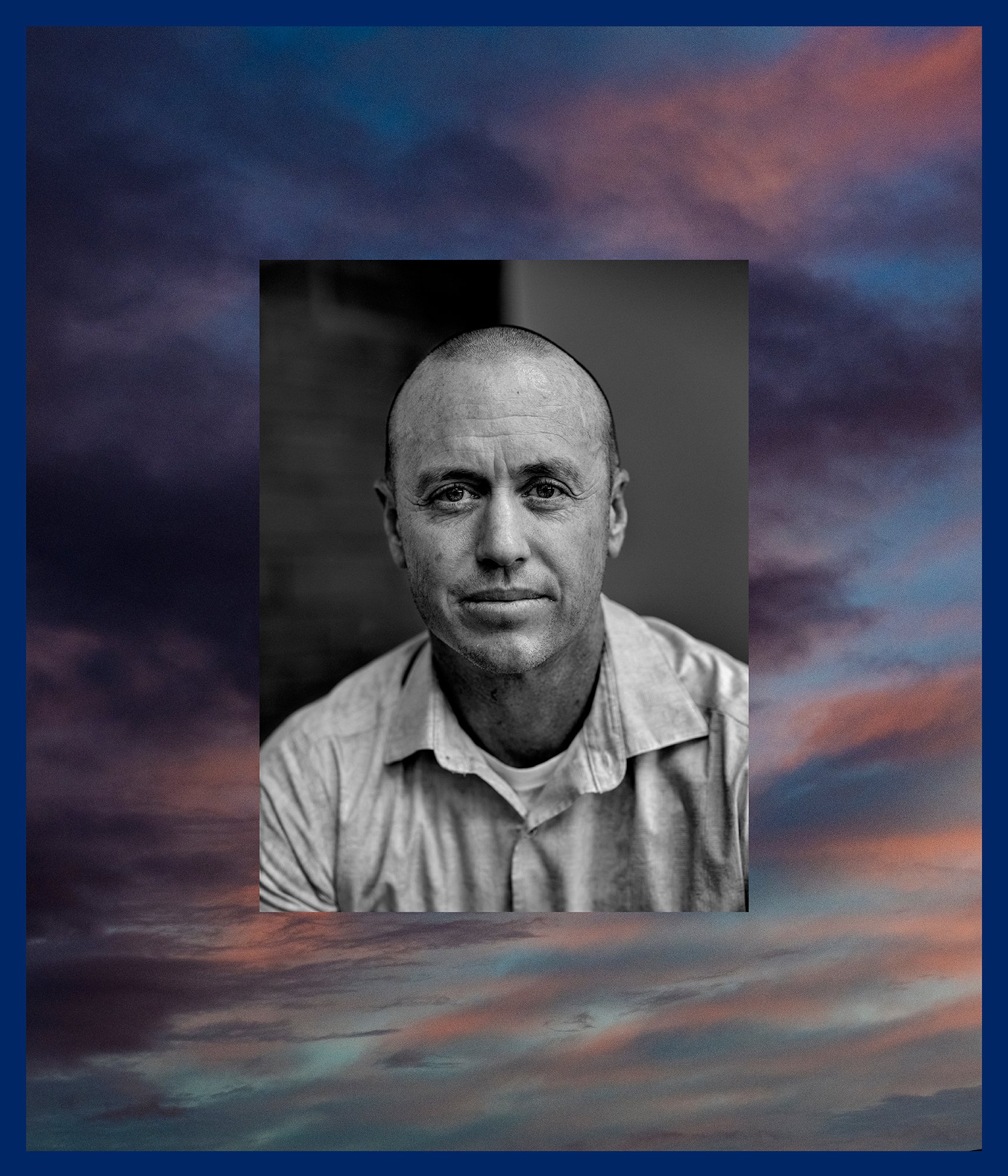
Captain John Taylor, Pacific Ports Agent for Masters Mates and Pilots. Los Angeles MM&P hiring hall. 21 January, 2026
Going to sea is a calling. It's what mariners do, it’s just kind of in your blood.
I do miss it. I’m able to quench that thirst with my own sailboat, but it's not the same as leaving San Francisco, going under the Golden Gate Bridge, setting a course for Yokohama fifty-five hundred miles across the Pacific with a crew of 20-plus, and thousands of containers on board. Getting ready to cross the Pacific - that's its own feeling.
You can't really match that. It's great and I do miss it.
My name’s John Taylor and I’ve been the Pacific Ports agent for Masters Mates and Pilots for about nine months now.
I got out of California Maritime Academy in 2007 and went right to sea. My last shipping job was December of 2023. I ended my career, I was a captain with APL Maritime. So I did my last four or five years as captain with APL on a container ship on the Far East trade.
..
I grew up on the water. I was always around sailboats and on the ocean. After high school my parents told me I had to go to college.
When I found out there was a college (California Maritime Academy) where you could get a degree and a Coast Guard license to drive ships, that was right up my alley. It made sense, and that's the route I chose.
The attraction of the officer route [verses shipping as an OB, AB, and then mate] of course would be money. But it also came with the degree, and you test for an officer's license. The job as an officer, being in charge of a navigation watch was more appealing than the alternative.
..
Going to sea is a calling. It's what mariners do, it’s just kind of in your blood.
I do miss it. I’m able to quench that thirst with my own sailboat, but it's not the same as leaving San Francisco, going under the Golden Gate Bridge, setting a course for Yokohama fifty-five hundred miles across the Pacific with a crew of 20-plus, and thousands of containers on board. Getting ready to cross the Pacific - that's its own feeling. You can't really match that. It's great and I do miss it.
..
It's January 2026 now, my last dispatch was 2023, and I'm still not used to it. You could say I became institutionalized on the ship. Breakfast at 7, lunch at noon, dinner at 5, you know, 1700. I like that, and acclimating back to land life has been a challenge. I had never been home, or on land more than three months at a time in almost two decades. So being home the entire year, seeing, watching seasons change and holidays …. it takes a lot of getting used to and I'm not there yet. I'm still figuring it out.
But I had to stop going to sea to be home for my family, for my two young daughters. So I had to do it. Maybe when they're grown up and on their own, I'll look at going back to sea, but for the time being with two young daughters at home, I had to be here.
..
Knowing that was my last trip was, you know, you can't visualize it. It was hard to accept even after I sent my resignation letter that I wasn't going back. I think I'm still grappling with that. And like I said, I probably will go back, so I don't know if that was necessarily my last trip. But I did know it was going to be the last time for a while. That's tough, you know, it's kind of your identity. And it's an odd thing to not have that anymore. Yeah, it’s odd.
..
I mostly sailed containers on a liner service mainly. So that’s a set route, you're back to LA every, … well the last ship was every 49 days. And you have pre-scheduled ports. You know where you're going and you know when you're gonna be back, roughly (speaking).
..
I think Japan was the best port - just efficient, clean, on time, friendly. Overall Japan was best. And then Chinese ports were the worst. Just the inefficiency. It's total chaos in Chinese ports. Total chaos.
..
Captains are still ultimately responsible, but the industry has shifted. The shift has been from shoreside office supporting the ship to now more of the ship supporting shoreside operations. It’s a lot different and that shift has happened in the last 10 years or so.
It makes the job, especially as master, a lot more difficult and frustrating. You may not notice that as much as a junior officer. But definitely as chief mate or master you'll see that your decisions are either questioned, not supported, or countered with the office - the office's belief on how things should happen on board. And they don't really understand life on board.
It's tough when you have to run decisions that are pretty important, that affect the ship and crew, past someone in Virginia when you're in Japan. And if you don't, you could be punished for that. It's just not the correct way to operate, and it's a shift that's not for the better.
In terms of efficiency, in China you can offer gifts. Those gifts you don’t necessarily have to run past the company, but the decision as to whether or not to supply the gift is being dictated by the company. So before, if the captain felt it necessary to provide a carton of cigarettes, or something that would help the operation, that was okay. Now, with the companies stepping in and essentially usurping license authority, you have policies against it. So that resource which helped our ship, which helped the captain achieve the overall goal, has now been taken away by a policy that was made by someone in an office on the other side of the world.
You have to comply with those policies, but it makes my job a lot more difficult. I'm the one on the ground that has to feel the effects of that decision, not them.
You know, in some cultures a gift is expected, and if you don't do it you will be treated differently. And that can be difficult and straining for the ship and the crew.
..
Overall there is a fraternal brotherhood/sisterhood of the sea, but managing crew members who are stuck in a small space for long periods of time with these different cultures and beliefs, it can be difficult. That's one of the hardest parts of the job, keeping order and peace on the ship.
The crew member who plays the biggest role is the Steward. It doesn't matter if you have the loudest screaming captain or chief engineer. Or the worst ports, or the hardest work on board, if you have a good meal that is extremely important. That can change the dynamic of the entire ship, no doubt.
..
The potential for a power dynamic between the chief engineer and the captain is there. It may have been different in the days of sail, but what keeps the ship moving forward is that engine, and the engineer plays a big role in that. I mean, it's a very detailed and complex job. To be able to manage a 90,000-horsepower engine and all of its auxiliaries and components is difficult. And, you know, without a solid engine department, without that ship moving efficiently, you can be in a lot of trouble. They know that, the engineers know that. And they take pride in it. It can come to a head at some points, but everyone knows the captain's overall in charge, and it's rarely questioned.
..
If you look back into the days of sail, you needed a crew to get on a ship. They all lined up on the dock and raised their hand, and the captain, or the chief mate, would pick the strongest backs to come on. It’s sort of how this has all evolved, it started with that. And really it hasn't changed a whole lot. It's just become more organized and better thought out. You can't have the same crew on board all year round, so you have to have people come and go, and reliefs rotate through.
I can tell you, I’ve worked with companies that were non-union and companies that were union, and unions are especially important in the maritime field. Being away at sea with limited resources, having an advocate for the crew to make sure that you have good food, proper working conditions, proper quarters, living conditions is essential to this operation, and that's what the unions do. In this field it's especially important and I think Masters Mates and Pilots with its history and its strong advocacy for its mariners provides that.
We've come a long way, but we're still bidding on jobs, kind of like raising a hand except now we have a card with a time stamp, and whoever's been out of work the longest gets the job. And (because of unions) they can be sure when they go to sea that they're gonna have good food, good living conditions and a good working environment.
Unions are essential, I think, for this industry.
Members are welcomed even if they're not here for a job. Always. Every union hall. If you're a member with Masters, Mates, and Pilots, every union hall will welcome you. You have a place to go.
…
Photos: Robert Gumpert
..
Transcription: Michele Colyer
…