Raymond Lynch, second mate. Master, Mates, and Pilots (MM&P)
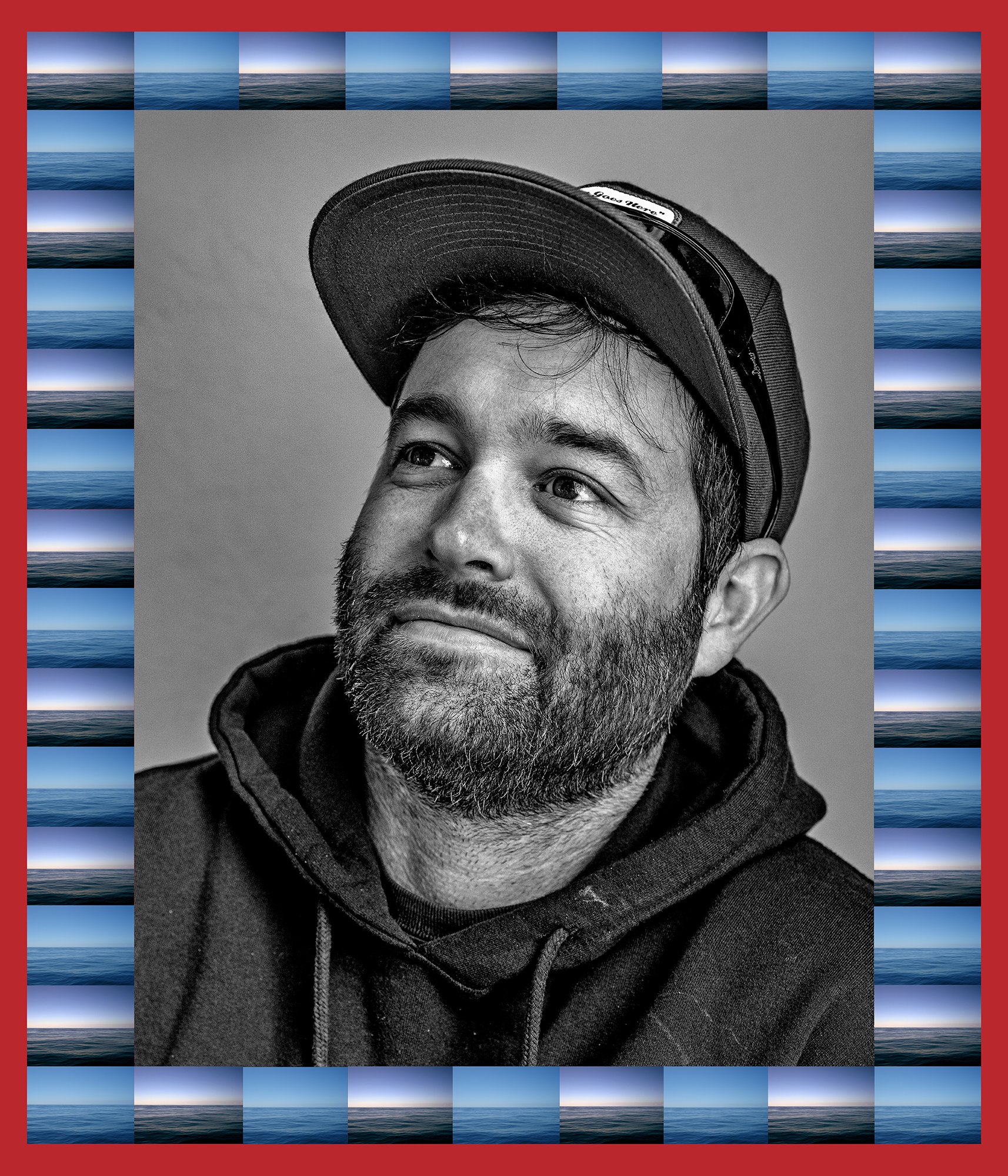
Raymond Lynch, 35 - Second mate MM&P hiring hall Oakland, California. 05 December, 2025
“I think about two days later, they said go to Tacoma and we'll figure out what we're going to do with you there. We got all the way up to like 50 degrees north in the middle of the Pacific and they said wait, never mind, we need you to go back to Thailand and get the cargo that you left there. The captain and chief engineer were a little antsy because we had just enough fuel to go one way or the other, but not to be indecisive.”
I started sailing in about 2014. I just didn't want to work at a desk.
I was on my high school sailing team and the Maritime Academy at the time was hosting high school regattas. I had no idea what any of this was, but we went over there and raced and I was like “What is this place?” I did a little research and thought it looked pretty cool.
I sail mostly container ships, (but) you know whatever comes up on the board. I try and steer clear of tankers. The union doesn't have a lot of tankers and it's a lot more hazardous. You know they have to check your body for benzene every couple years, and it's just not great.
The ports aren't great (either). A lot of the tanker terminals are in pretty remote areas so when you get into port you're in the middle of nowhere. You’re on a container ship, you go to downtown Honolulu. You can get off and go to downtown!
..
A favorite port's a tough one. I mean, Hawaii's always pleasant, but it's more fun going to the backwater ports. Thailand, Philippines are usually pretty fun. Mostly Thailand, I think.
Those gray ships tied up right across the street from the ballpark in San Francisco. They're government ships. They carry military cargo and every winter they do a military exercise in Thailand and the Philippines. You just ferry equipment back and forth - tanks, humvees, helicopters. You get a lot of time in port on those ships which is a good thing for me. It's probably not a good thing for some of the other sailors on board. They tend to get in trouble.
Least favorite port would be anywhere in China, and probably Busan, Korea as well. China’s pretty bleak and dreary - it's dystopian. It's dirty. They don't like you, they don't want you to go off the ship. You can go ashore in Korea, you can go ashore in Japan - China, nope.
It's just gross and depressing and you gotta go all the way up the river. I don’t know what it is, seven, nine hours or something, do all the cargo and then leave in a very short amount of time.
So it's sleep deprivation, and some days you walk in the house off the deck after cargo in China, and you can barely breathe because it's just bad air.
..
These days I just like the time off. There aren't too many jobs that you can just go to jail, do your time, and then get out and have all the time off you could possibly want. So it’s more about the time off than the time on.
I mean, I've never been to jail so I don't actually suppose I know what that's like, but I imagine it's not as bad as jail. It's just you're away from friends and family and anything you want to do. You know, a lot of days in a confined space. With a nice view, but you're still pretty well locked away for an extended period of time.
..
The Union, a mixed bag. It's got its pros and its cons. I got buddies that are sailing non-union and sailing union. I think all in all it's great just to have the bargaining power and have somebody have your back. But you know it’s a bureaucracy like any organization.
The hall is a place to commiserate when you don't get work. I usually won't take a job unless it's four months or longer. Just get it all done in one go. Then you can have a larger time off.
Shorter jobs - a two-week job, a month job, month and a half job - do that and by the time you get off and go do something, it's time to go back to work again. I’d rather just rip the bandaid off and go try and live life. I'd rather enjoy my time.
..
I haven't been able to travel the last few years. I started a side business in Idaho, and so I basically ship during the winter and get off the ship and go straight to work in Idaho all summer. Then the snow comes down and it's time to fly south for the winter and get back on a ship. I think it's been about four years since I really had a vacation.
..
Ships of the same vintage and type can be very different, even if they’re technically the same layout. For example, there's the ships in San Francisco, those gray ships I was talking about, there's three of them. They're the Cape Ages (class of ship) - the Cape Horn, Cape Henry, and Cape Hudson. Two of them were built in Norway, I think, and one of them was built in Japan. If you look at them from a distance they're pretty much exactly the same, the deck layout for the cargo is pretty much exactly the same. But the rooms, the furniture, the swimming pool, are all very different. The Scandinavian built ones have a sauna. The Japanese one does not have a sauna. There's a cover over the pool on the Scandinavian ones and the Japanese one you roast. The Japanese one you get a bathtub in your room, and a much nicer room. The Scandinavian ones are pretty bare-bones.
And the mess on those ships, on the Scandinavian ones, instead of having a separate crew mess and officer's mess, it's one big one. So you can kind of hang out with each other. I like that more. I don't want to sit with just the officers that have the same complaints every day. It's kind of more fun when everybody's together. You just get more dynamic in conversation at dinner.
So they all have character and they all have their flaws, but you know I would say those ships were pretty fun. I liked those quite a bit.
All the ships handle fairly differently, but you just spend an hour or so and you can kind of get how it handles. As far as maneuvering they're all kind of the same. How it handles like at sea state - you know storms, weather - they all handle quite differently. Some of them you might be thrown out of your bed once or twice, and some of them just kind of plow through anything.
..
With regard to Covid, we were actually in Thailand with no cargo, nothing to do, and we were having a great time. Then the order came down - “Gangway up”.
I think about two days later, they said go to Tacoma and we'll figure out what we're going to do with you there. We got all the way up to like 50 degrees north in the middle of the Pacific and they said wait, never mind, we need you to go back to Thailand and get the cargo that you left there.
The captain and chief engineer were a little antsy because we had just enough fuel to go one way or the other, but not to be indecisive. They didn't even know where we were going to get fuel because those ships require a fuel that they don't sell very many places. So they were like, just start going west.
I'm like, okay, west – there’s a lot of different wests you can go. They finally said go to Korea, get fuel. Did that, and pulled in on fumes. Took (on) fuel, went down to Thailand, grabbed the cargo, and back to Tacoma.
But the whole way across we had internet that was about the speed of dial-up so you can't really surf the web. The main source of news was the New York Times’ three-page email newspaper that just has select stories.
We don't know what's going on. We've been at sea for weeks and weeks, and we're reading the New York Times of bodies piling up in trucks in New York. It’s like, well shit, is the world over?
The news was pretty scant, and we're just trapped, and we don't know what we're gonna come home to. But yeah, we made it home.
And then the next year we went back to Thailand and they wouldn't let us off the ship at all, couldn’t even go on the dock.
It was funny because we had contractors flying out from San Francisco to work on the ship, and if you flew from San Francisco to Bangkok and took a COVID test in the airport, you could go around Thailand wherever you wanted to go. If you spent 30 days on a ship, without seeing anyone, or touching anyone, and came into Thailand you couldn't go ashore because you had germs. From where, I don't know. So it was pretty brutal for a few years.
Knock on wood, hopefully nothing like that happens ever again.
..
Raymond Lynch, second mate. MM&P
..
Photo: Robert Gumpert
Transcription: Michele Colyer
…