From the MM&P Hiring Hall: Sean R Sabeh, Captain
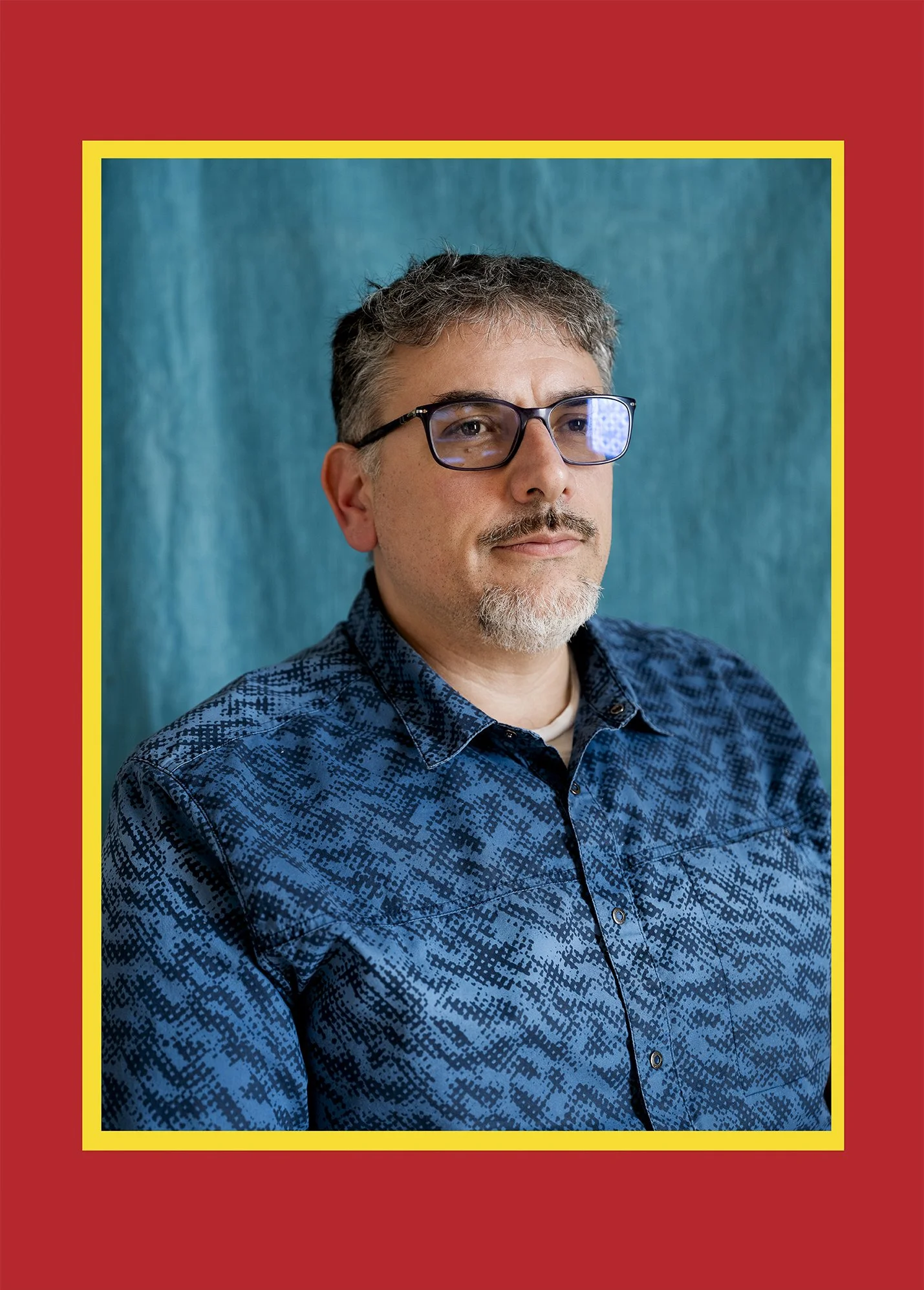
Sean R Sabeh, Captain of the USNS Sisler
On the water with the MM&P since 2010.
MM&P Hiring Hall. Oakland, California
I sail as Master, or Captain, of the USNS Sisler. It's a government con ro-ro. They haul containers and it's roll-on, roll-off cargo.
..
I was looking for something a little less than ordinary of a job, a little more adventure. I grew up here in the Bay Area, and it's a wonderful place, and lived a lot before I started sailing.
I actually picked up this career at an older age. I had been married. I'd been divorced. I lived with people I'd known for a long time in the Bay Area, and I loved it.
When I found this job, this career, a calling really, I was looking for a change, an adventure, to really change my path because I'd been here, living and working in the Bay Area my whole life, up to my mid-20s.
You know, I just haphazardly was like this [the merchant marine] looks like an adventurous, interesting job. Dynamic. You get away, and you have an opportunity to disconnect.
I was like, let's give it a try. And it just, it just fit like a pair of well-worn gloves.
The first time I was off the dock, and in the middle of the ocean and couldn't see land anymore, I loved it. It was just electric.
This is an experience few people actually have the opportunity to have anymore. It's not like being on a plane where everythings happening so fast, and you’re pressurized, and in this toothpaste container full of people. It's an organic. Quiet. Self-reassuring. Just this beautiful experience.
The first time I was out to sea on a clear night, no moon, the sea, the veils of stars over the ship, I mean, it didn't take long to know that this is what I was meant to do. I love it, and I always have since I found this job.
..
I've built the life around what I do for a living because I love it so much. You know, I make sure I'm not hurting anyone's feelings. I don't have any children. I haven't married. I was married before, but it was before I was sailing. People have to understand this is a really big part of who I am.
It's not like I'm doing this because of the money. Or because I want to do this, or I want to get away. I love this job.
I’ve tried to do day jobs. Working ashore is very difficult for me. You know I'm good at office work, and I'm organized. But it's just the grind of always being in the same place, and not moving.
You know, I might be in an office, but my office is going to be anywhere in the world, I could be on my way to anywhere in the world. So, yeah, it is kind of an office job once you become a captain, but your office is moving.
There's an adventure just to be had there. You're getting out of ports. It's dynamic and interesting, and every time you go somewhere new there's expectations and things you learn. It’s always changing, so it's amazing.
..
Well even now (having a contract) what the [hiring] hall represents is the freedom to work when you want to. If you're smart about your finances, if you're careful with your money, you could work one job every two years and be comfortable. (Even) one job every year. I know plenty of people that just work one gig and then they're off, they work four months and they're off eight. Or they're off 11! They build their life around that freedom, depending on where they live and what they do. Things are expensive, you have family, everyone's finances are different. So I understand that.
There's also halls all over the country. So, if you need to work, you go in there, you sit down. You talk to the dispatcher, the patrolman, the VPs, whoever’s running the hall, and you settle yourself up, and you have opportunity to night mate, so you can survive. You can actually earn while you're visiting this area trying to get out on the job. It's very adventurous. It's very old world. I mean, nobody does that anymore. Think about it, I could show up to Texas with no family, no friends, nobody there. Just go to the hall, rent a room, and start earning money while I'm waiting to get on a ship and go somewhere else in the world. An unbelievably adventurous job.
It's dumbfounding to me that more people aren't like this is incredible. This is one of the last real adventure jobs. It's one of the last. The world has been all charted. We know every inch of the planet now, but this job is still a great adventure.
Things are different every run, every haul, every time you go out somewhere, it’s a new experience. And that's rare in this world where everything seems to be so documented and monotone.
..
Night mating is the cornerstone to being successful, building a successful foundation to work on the ships that you want to go to sea on.
This union has many different kinds of vessels. but our bread and butter, for the most part, are container ships, liner services. It's the majority of our tonnage. We do have ro-ros [roll on roll off vessels] as well, and I'm working on one of those. We also have tankers. But, you know, our bread and butter, the majority of the vessels we service are container ships on liner services.
So night mating is a great opportunity for a new member, or even somebody that just wants to make a change: go to a different ship, or a different class of ships, an opportunity to work on the vessel without sailing it. You get on the vessel without sailing it, without the leave.
You get on the dock, you're covering the job while they're loading cargo. You have the opportunity to learn all the mooring winches, arrangements, how the automation works, how the constant tension works, what's the bridge equipment, where the layout is. You know, where are all the breakers for things are. How the bays are set up. Which direction, and which bays do they have to have the reefer boxes lined up so that you plug; so they can be plugged in.
When you take a job off the board you know you're expected to get onboard and be ready to sail. It's not like you're going to be sitting on the dock for three or four days to figure everything out. Night mating is is an opportunity for you to get onboard, get your familiarity with the vessel, and be paid to do it. And help the vessel work the cargo.
When you're overseas in foreign ports there's not going to be a night mate. You're going to be working the cargo yourself. So you're learning that component of the job as well.
So you get to spend eight hours on job training, so to speak, but actually working as well. It's a very important thing. You can become very proficient at what's going on in the vessel, vessel operations, and not have to worry about the components of - now I have to run upstairs, do the gear test and sail, right now. Which is hard when you're doubting - did I make sure the lashing is done correctly. Or is this done correctly? Then you're going to run up to the bridge, do a gear test, and try to sail out the door too. It's a lot when you're new, or you don't know the ship.
So night mating is a great opportunity for people to get the experience they need to have to have the confidence to be very efficient at their jobs. When it is their time to sail the ship, they're going to take the job onboard, and not just do cargo like a night mate does.
..
I've always had a dream to work on LNG ships, but because there isn't a U.S.-flagged LNG ship, an LNG carrier, that's impossible.
I had a small opportunity to work for an LNG carrier,
the last one that was U.S. flagged, but it dissipated pretty quickly.
I was an applicant. I had just gotten out of school. This was 20 years ago, 15 years ago ago, so that was the last time they had liquid natural gas carriers in the United States, or U.S flagged. We invented the trade, but we do not have any U.S. carriers of lNG so …
That is the most state-of-the-art kind of cargo, a cryogenic cargo, you're moving cryogenic cargo, and that's amazing. It's amazing what we've accomplished, and how we can do that. And so I've always, like, there was always that soft spot in my heart.
I love what I do, though. I have no complaints, but that's something I was always fascinated by, and early on in my career I was actively seeking that job. It just never panned out because of the lack of opportunity.
..
I just feel like tankers are very dynamic, and it's different. It's like you load, and discharge your own cargo. So when you're loading fuel, or you're loading crude oil, or chemicals and it's liquid, there's flow rates. You're constantly calculating flow rates in tank top-offs, and watching levels and doing soundings, you’re running around.
The crew is very involved on tankers because liquid, especially some of these port terminals you're looking at, it's amazing the flow rates they're having. And you're filling like six to eight tanks at a time. I mean it could be very taxing. You're in the control room, and you're calling people on the radio, double-checking numbers, watching all these gauges and, you know, there's a lot happening because they want you in and out of the port.
A container ship, it's a little bit different because the longshoremen and the stevedores are working the cargo. They're still very, very busy, and they're still dynamic, and there’s a lot of things going on. But it's a little bit different because it's not on the guy in the control room - it’s not like, oh, I gotta shut this down or change tanks.
The container terminal is gonna tell you when they're gonna stop moving boxes, or things like that. You have to chase down the hatch bosses for certain aspects like: How many more moves do we have? When are you moving these bays? Hey, it's going to start raining, you want to put these hatches back on before you stop so you don't flood my cargo. (Don’t) flood below deck hold and I'm pumping bilges all night. There's their own set of challenges on container ship, but like I said, with oil there's nobody shoreside onboard and involved other than the people that are turning on the (valves) - you know the people you scream at on the radio “stop stop stop”, if you want them to shut down.
You'll have a team of people usually come on and help you with the Chiksan, or the hoses when they're connecting to the ship. But after that once the flow starts it's all on the ship. Your guys are running around making sure you don't overfill things, and spill oil. It’s different.
..
(Ships of the same class and the same vintage), they can be different, especially if they built a bunch of ships. If yours is the same class of ship, but it's built in two different shipyards in Korea, there can be little idiosyncrasies, things that are different about them.
Layouts for the most part, like the hull and the warping winch arrangements, they're not going to change a bunch of stuff like that, but I've seen little things change.
I work on a Watson class ship, and other than the fact that the Marine Corps has taken two of those ships and changed them because they added extra housing, extra berthing, and added a helo tower [control tower for helicopters] and a telodeck [multi-deck, garage-like interior for driving vehicles on and off, where cargo is secured, often using liftable or movable decks to maximize space, combining RoRo efficiency with container capacity] to the Marine Corps version of the ship because they want to be air capable, the layout of the ship is the same.
So I've worked on six different Watson class ships, NASCO [General Dynamics NASSCO] built ships, and they're like knocking them out, and other than the changes I just noted they’re there's little differences. Like the first one, there's little things that were different or systems that they changed. They swapped out different heeling system control pumps [uses pumps and valves to transfer ballast water between port and starboard tanks, controlled by sensors to control titling of the ship], and stuff like that. But for the most part, this ship's the same. You know, the things that are different aren't enough to really throw you when you go class, different ships in the same class, to make you feel like you're on a different ship.
..
Trying to think of my least favorite port. I could say my favorite two ports that I loved. Ashdod, Israel, that was amazing. We were loading yellow phosphate fertilizer and we were there for, I think, 17 days. Amazingly the conveyor belts kept breaking. I think they just liked to have an American ship in there, it happened so rarely. That was an amazing place.
Ashdod is next to everything. You got Tel Aviv, old Jaffa City. If you have some real time you can go up to Haifa. It was epic. I mean Israel's beautiful - the food, the nightlife, everything. It was amazing, it was an amazing experience.
I was on a breakbulk ship so we had so much time. It's not like a container ship, it's a different experience. (That’s) another class of ships that Americans really don't have very many of. I recommend to anybody that has the opportunity to try one of those because it's just so different. It's like sailing of old times, like the stories you hear about because no one has two weeks of port time anymore. It never happens.
And then Bilbao, Spain, because I could literally stumble to the Guggenheim Museum from the docks, and it was like unbelievable. Those are my two favorites. It was amazing and crazy. The food and the people, it was like the dream ports.
My least favorite port of all time would probably be Djibouti, or Port Said. Thank Maersk [Danish shipping and logistics company] for that experience. Or Jeddah. So Jeddah, Djibouti, and Port Said. They're all very close to each other, and they're all stinkers for their own special reasons.
Port Said is Egypt which comes with a whole list of challenges that anybody who’s ever sailed in Egypt before knows about. I'm not going to get into the idiosyncrasies and the details of it, but they'll know. Egypt can be a challenging place to get in and out of it, especially with their interface with the folks ashore.
Jeddah was just - you show up and you're not allowed to leave the ship, and that's it.
And Djibouti is just very different. I've been there on different classes of ships. I've been there on a container ship. Forget about it. Djibouti is one of those places where it's a little depressing. Some people really like it, so I'm not trying to tell anyone it's not interesting. But for me, it's one of those places that was just a constant bummer. Even when you get off the ship, you're like, wow, yikes. It wasn't my cup of tea at all. I walked around and I was like, yeah, sucks to be poor. I get it. So I'm not trying to poo-poo anybody's life, but it’s one of those places that made me feel really grateful to be an American. I was like, thank God.
..
Mount Whitney [one of two Blue Ridge-class amphibious command ships of the United States Navy 6th Fleet], that's the dream job. That is the flagship. it was one of the flagships for the Mediterranean, it had been for a long time. I've never had the opportunity to work there myself. It’s a USS so it's a hybrid crew, which is very rare. You have a naval officer as the captain of the vessel, and a licensed chief mate, military sea of command, and it's completely different. Some people would be turned off by that, because when the commanding officer of the vessel is in the Navy, it's going to come along with some pretty strict rules and outlines, guidances that you're not going to have on a commercial ship, like people aren't really wearing uniforms, or anything like that.
But the flag admiral will use that ship to go to ports, or tours. Or when there's military operations. And so that ship can get the red carpet treatment during exercises. Dock appearances, they're going to get some really good parking spaces. I mean, when the command group is on that vessel you're going to have an opportunity to go to places that no commercial ship's going to ever go to anymore. You could be in Sicily, you could be in Rota [Northern Mariana Islands], you could be in Croatia - Split, Dubrovnik. I mean, think about it, anyone [the admiral] wants to go somewhere, they're going to go. And if you're on their ship, you get to go with them, and ride those coattails. And that could be an amazing experience.
All my friends who ever worked those ships were like we go to these amazing exercises. It's the “red carpet” treatment before our little ship gets put on the dock and, we never have to go anchor. It's a winner. If you work for Military Sealift Command, and you’re personable, and don't mind having a hybrid crew scenario, it's a great opportunity to do a lot. See a lot of the Mediterranean, or Baltic, wherever the ship happens to be operating.
It's not an MMP vessel. Actually, that's not true. It's part of MMP government division, which is not MMP offshore. So they don't call that job in the hall. You have to join a Military Sealift Command, and go work for military command as a CIVMAR (Civilian Mariner) to work on the Mount Whitney.
…
Sean R Sabeh, Captain of the USNS Sisler
.
Photo: Robert Gumpert 29 December 2025
Transcription: Michele Colyer