From the MM&P Hiring Hall: Al Polk, 2nd Mate
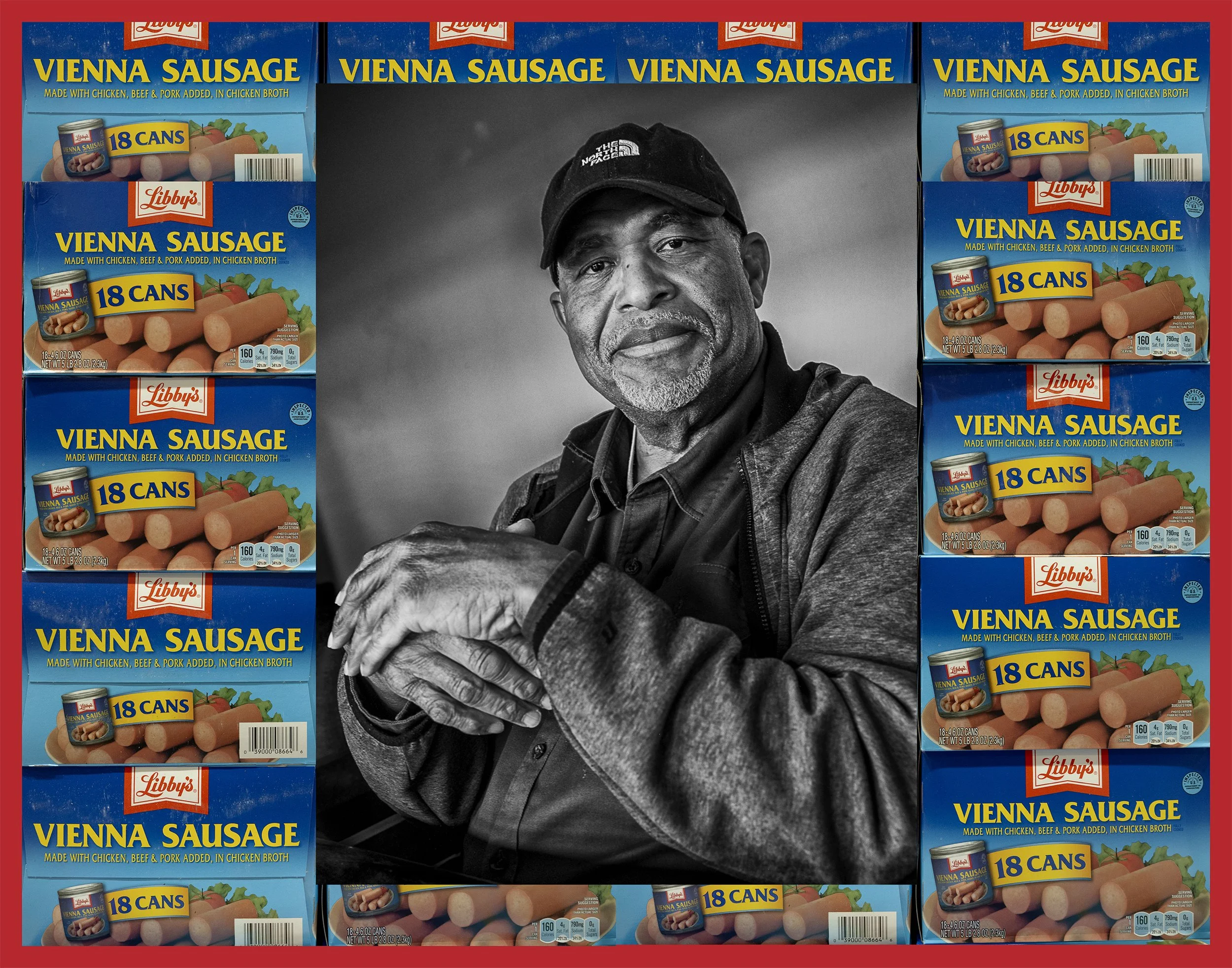
Al Polk, Second Mate
MM&P Hiring Hall, Los Angeles, California 22 January 2026
“The standard measuring cup for making coffee on a merchant ship for the last 100 years is the Vienna sausage can.” Al Polk
“I told the Vienna sausage can story to a APL bosun who said he was an ordinary seaman , he was taught to put a 1/3 of a stick of butter (not salt) with the coffee. 🤣hahaha” - from a 22 February email
My name's Alfred Polk. I go by Al for the most part. I’m 66 and change right now, and I ship as second and third mate from the Masters Mates and Pilots Hall. This is the twenty-fifth year. Overall for 40 years - started in mid-'80s as an unlicensed sailor.
..
My dad, who I didn't grow up with, was a master chief in the Navy. He was stationed in San Diego and he said after your freshman year why don't you come out to San Diego and see if you like it. I went out there for three weeks, and three weeks turned into 25 years.
I just left San Diego in 2004 and moved to where I live now in New Mexico in 2005.
But when I moved to San Diego, when I was out visiting my dad and stepmom and my sister, all of my dad's buddies were chiefs and senior chiefs in the Navy. It doesn't take much for a party, or barbecue to break out in a Navy family like that. One chief has just got to be with another before they say, call your wife and tell her to bring over a case of ribs. And you call your wife, and tell her to bring over a case of Hennessy. The dominoes come out, and all these people show up.
At one of these barbecues I was having a beer with one of my uncles - all these chiefs and senior chiefs and master chiefs, no relationship to me at all - but they were my uncles.
I was talking to one of these uncles who said his name was Market Time Johnson. I think he was in ‘Nam with my dad, and I was telling him the biggest conspiracy against the American people was this idea of working 50 weeks and getting two weeks of vacation. Market Time Johnson had left the Navy, and now he was a bosun on oil tankers. He said, “I now work for these private companies on this tanker and whatnot, and for every month I'm on sea, I get 18 days of vacation.” And I'm, “Whoa, whoa, whoa, whoa, what was that?”
That was Saturday. On Monday morning I was in Long Beach under the old Long Beach Bridge when the Coast Guard was in that Quonset hut. The Coast Guard told me (what my “Uncle” had said) was true (but I needed a letter of employment to get a “Z Card”) [a former term for the United States Merchant Mariner's Document (MMD). There were no jobs then. Or there were, but I just couldn't figure it out.
I worked the waterfront and I beat the bushes. I'd go to all the union halls - the SIU (Seafarers Intentional Union) and the NMU (National Maritime Union) - there'd be an old guy sweeping. There'd be nobody else around but him. I'd ask him, you guys got any jobs? The sentiment was no we don't have any jobs and we're not going to get any jobs. And we never had any jobs. You expect a tumbleweed to go flying by and whistling wind there in a minute.
But I wasn't put off by that. I’d worked San Diego, L.A., and San Francisco, all the companies that said they had a ship. It was just pretty bleak, best I could tell. I mean, for somebody with no experience.
I wasn't giving up on it. I put on a suit and tie and I went over to Arco Plaza in Long Beach and started up on the top floor. I looked at the directory and there was a lot of shipping companies in that building.
A lot of times when you say So and So is shipping, that means that they ship boxes or whatever. I didn't know that. I went in their office anyway. I started up at the top floor and I went to everything on that floor that said shipping. No luck.
By (floor) 18, nobody had any jobs. When I got down to 15 there were more companies, but there was only three or four people to talk to. I was starting to find out this just was not the way to do it.
So I invented a story between floor 15 and 14 that I had a wife and a couple kids to support, and no job. People would look at me, and my resume, and they would kind of shrug. By the time I got to 11th floor, I had five kids.
I went into this office, big office like this hall is. There was a receptionist desk and an executive desk way back, but only one person in the whole office. The guy sitting at the desk took my resume. He did in fact have ships? I said I'd like to start going to sea.
In those days you couldn't just walk up (to the Coast Guard) and get papers. You had to have a letter from a company that says they had a job for you, then you could start going to sea, which was why I was visiting all these companies and union halls.
As I got further into the talking about the ships, I said, you know, I got a wife and five kids. This was a small man, probably in his 70s. He had these old half glasses and he was looking at my resume at the desk. When I said five kids he looked up over those glasses and says, “How old are you? You got five kids? You need a job!”, and took out his pen. He says, “Five kids!” And he signed. I left there, and went straight to the Coast Guard. They were just about to close, and they issued me a Z card - a huge damn thing, the card that you carried, it was big.
..
There was just no jobs. But I had the papers, and once a year I'd come up here to the union halls and look around.
My last (shoreside) job, I was selling welding equipment in San Diego. I thought I was doing pretty good. I had a company car and I was selling big welding systems: cylinders, cutting systems, MIG, TIG and arc welding equipment. I thought I was doing swell.
Then I got my first OB job.
I got this call from one of the union halls here in L.A., and they said are you still interested in going to sea? And I'm like, absolutely. What do you got? How long do I have, and what is it? They said it's a job working in the steward department. I said, how much time do I have to give you? They said about three or four days, you need to go to Texas.
I called my wife and I said, “Hey, I think I might have gotten my shot. What do you think?” And my wife says, “As long as I've known you, all you (ever) talked about is going to sea. Now you got questions? Follow your dream.” And I'm talking to her, and I'm looking across the office at my sales manager. I'm like, I got to go tell him. And he said, “As long as I've known you, all you talked about is going to sea.” Just like that. So I left them, and flew down to Beaumont, Texas and got on that ship - it was a chemical tanker.
..
My room was right next to the Steward. I'd been on there for about three weeks and somehow I ended up on the captain's deck emptying his trash. The BR (bedroom steward) got off the ship and the Steward says we're gonna make you BR for a couple of weeks, till this other guy comes.
..
So I was up in one of the engineer's rooms and I passed by the captain's room, and he says come on in, I want to pay you off. He pulls out this cash box and puts this payoff sheet in front of me. You want all your money in cash? I'm like, yeah, and he started counting up $100 bills - $1,000, 2,000. My eyes were really big. He's not stopping. After he counted out about four grand, and I was still looking at the money - he says, sign right there. I went down to my room and counted out the money on the bed, about six times.
I liked that, my first payoff. I'll never forget that.
..
Like I said, I did that first steward department job, and it was okay. But I didn’t think I could do for a career. So after I got done cutting up a couple bags of potatoes, carrots and whatnot for the Steward, I went and looked in the engine room.
I asked the first engineer if he'd show me around the engine room. I'd been on a ship for two weeks and I'd never seen the engine room. It's late July and we're going Beaumont to Florida. It was 100 degrees outside, probably 125 degrees in the engine room. The watch engineers would hang out in the control room. The First would walk me around, and he would stop to talk in the engine room - it’s 125 degrees!
It's already hot enough where I work in the galley, it’s even hotter down here. And steamy. He would stop like between the boilers to talk. He would be shouting all this stuff which I couldn't hear, and I looked around, and I really wasn't listening at that point. I thought it's really hot down here, all the time. I think if we were in a cooler place, it would still be hot down here. There's no windows, and I can't see anything.
The next week I decided I was going to go see what they did on the bridge.
To get up to the bridge you went up on the top deck, past the captain's deck, and that's as far as I'd been. (From there) you went up a ladder, and came to a landing that was probably 20 feet long. When you got to the top of the landing you opened another door, and you were on the bridge.
I could hear Black Dog by Led Zeppelin playing at an incredible volume. I recognized it immediately. In the middle of the floor, in front of the radars, the Third officer and the deck cadet were air guitaring before air guitaring was a thing. And I thought, I think I might like to try that.
From then on I sailed in the deck department as an ordinary seaman (OB). I got my Able Seaman (AB) ticket, and I never went back to the engine room. I sailed as an AB probably 12 years.
..
On tankers they don't typically have ordinary jobs, they have what they call general vessel assistants. That means that you can work in engine room, storage department, or on deck. They'd have two general vessel assistants and I was one of them. I’d been on there for a few days and the the bosun, the gang and I were up on the bow working on something. The bosun said it's almost coffee time, take that youngster back there and show him how to make coffee, that’s his job. That’s your job, and you better have it down by tomorrow.
I went back with this AB, and they had a Bond coffee machine,12-cup, standard of the industry probably for the last 80 years. You get the water plumbed into the back, or you pour 12 cups of water in there. You had like four choices of coffee: Hills Brothers, Folgers, Maxwell House, or what I called, Chock Full of Rocks (Chock full o’Nuts, a coffee brand established in 1932 in NYC). But they had Hills Brothers on this this particular ship and they stored it in what they call a stainless steel bootleg - a stainless steel container with a top on it - probably 10 pounds of coffee.
The AB who's showing me how to make coffee - you take the filter and you chuck it - and he did just that. And you take the pot, you kind of rinse it up good, you rinse it out the second time. Make sure that water is cleared.
Now you put the filter in there. The standard measuring cup for making coffee on a merchant ship for the last 100 years is the Vienna sausage can.
My initial reaction was, Who didn't get the memo about Vienna sausages? I think a bunch of you guys are in poor health. To this day that Vienna sausage can is still on ships. Who didn't get that memo 80 years on?
Anyway, he says you take off the top of the bootleg with the coffee, and he takes one round of scoop. It’s a lot of coffee for one pot. And it's rounded. So I'm thinking that's going to be some strong coffee. (Then) you take another scoop, round it like that. And I'm like, there's a lot of coffee in there, there’s probably three inches of coffee. I'm thinking almost a pound of coffee. Typically when you make a strong pot of coffee for 12 cups it's like six of those itty-bitty tiny cute scoops that you get in a can.
And I said, why do you use so much coffee? And he said, we like strong coffee. He goes back to a mess hall, and grabs the salt shaker. It's a standard salt shaker, and he cranks the top off, pours out two rounded tablespoons of salt, and puts that on top (of the coffee).
“Whoa, what's with the salt?” He says, “Well that takes the bitterness up.” And I said, “Well all due respect, if you didn't use so much coffee, it wouldn't be that bitter.” He says, “Listen son bitch you want to learn how to make coffee or not?”
So in week and a half, I had them down to about a teaspoon of salt. After another week I cut all salt off. Every now and again somebody would grumble, and I'd have to put a little bit back. But I had them cut off salt pretty much, and I reduced the amount of coffee too.
They had old style ceramic white cups. I got to looking at the bosun's cup, and it was crusty black on the inside. He never rinsed his cup. He just kind of dumped it. So I went in the scullery and I tried to scrub that thing out. I washed it out with soap and water. I rinsed it, and rinsed it. I saw the steward and I said you got any bleach? And I put like three drops and everything was white, clean like it ought to be. The bosun picked up his coffee cup off the rack and said, “Who the fuck washed my coffee cup?” I say, it was black, and he say’s, that was seasoning. I'm like, this is not a frying pan, dude. It's a ceramic cup.
Anyway, I only had a little bit more time to do on there, so it was funny.
..
When I started going to sea, the crew, they were old guys. I understand why they hung on because when I went to join the Vietnam War wasn't over very long. It was the late 70s, and I didn't get my first Sea Card [Seafarers Identity Document (SID), referred to as a Sea Card, is a mandatory, internationally recognized identification document] until 81, or so.
So, my first job as ordinary the deck gang [watch makeup] was: 4 to 8 ABs: 68 and 65. The 8 to 12s were 67 and 71. The bosun was damn near 70. And the 12 to 4 AB was 56, 57? I think 57. And I was like 28.
..
It was kind of a funny ship when I joined it. I lived in San Diego, and I caught the ship on 23rd of December. The ship finished its discharging, and then the it went out to Foxtrot Anchorage in L.A. Harbor. The cutoff for getting a launch to come back and forth into LA is Delta Anchorage. So we went out far enough that we didn't get a launch. We stayed out there until the 28th of December, and the crew was entirely pissed for a long time after that.
But the ship was a tramp. It would go to L.A., Richmond, Sterile Bay, Morro Bay, and Rodeo up in San Francisco. And then we'd just tramp around with black oil.
It was so long ago those ships were all scrapped down. They're all razor blades. Not even razor blades anymore.
When I joined the NMU, the people who had the most ships with the NMU were Leakey Brothers [Lykes Brothers Steamship Company]. It was Leakey Brothers, and then Texaco and Keystone. There was one or two other companies, but that was the bulk of our contract. I mean, when I joined the NMU, I think the Leakey brothers had 28 ships, some of them were old. They needed to be laid up. They were pacers and clippers and stick ships, and a lot of stuff needed to be laid up a long time ago.
Then Dr. Lykes died, and his sons got a hold of that company. They wanted to get their inheritance out of those ships, so they started sending them to be razorblades.
The powerhouse on this coast now has become Keystone Shipping, and they're in that Alaska Tanker Company consortium
..
I was on a lot of tankers going between LA, Oakland, and up to Alaska to pick up crude on super tankers that were absolutely huge - one and a half, two million barrels of crude. Just back and forth, over and over.
When I started going to Alaska I was on a Keystone ship that would go LA - Panama. The shipping companies built a pipeline across the Panamanian mountains and the supertankers would go down there and pump off two million barrels of crude. They would pump it across the mountains, and smaller ships would pick it up, and take it up to Houston refineries.
I don't know if they still do that, but I'm sure they do. It was a cheaper way for them to get Alaskan crude up to the refineries. But pretty much, it was Alaska, LA, San Francisco, to the refinery down here (L.A.), as well as a lot of Richmond Long Wharf.
..
I had heard that if you sailed three years as an AB you could take the same five-day exam that the deck cadets take in the Maritime Academies. And that's what I did. I planned it out to do that, and I went up to a maritime school in Seattle for five months. I didn't get through it the first time, but I came back the next year and got through it. And I joined the MMP. And here we are.
..
Al Polk, 2nd Mate
…
Photo: Robert Gumpert 22 January 2026
Transcription: Michele Colyer