From the MM&P Hiring Hall: Jorjiane Guasch, Second Mate
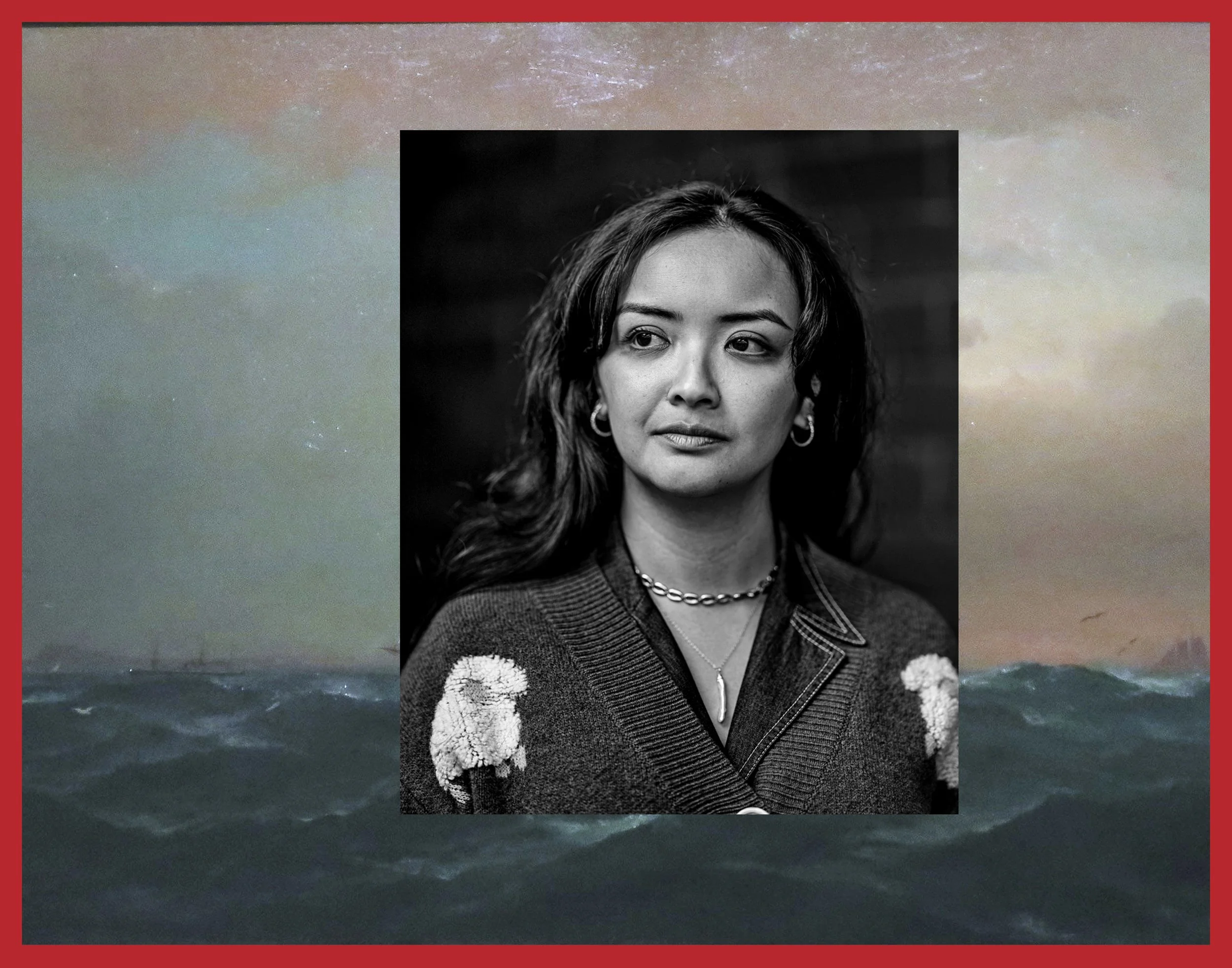
Jorjiane Guasch, Second Mate
MM&P Hiring Hall, Los Angeles, California 22 January 2026
“Every time I come in and I see the Ko’olau Range and Diamond Head and Aloha Tower, I think about growing up on the island. And I think, oh, she'd be so stoked to see all the cool things that I've done.”
My name is Jorjiane Guasch, and I’m 30 years old. I sail as second and third mate.
If you’re from Hawaii, you either leave or you don't. It's like a small town situation in the middle of the Pacific. I knew when I was in high school that I wanted to get off the island.
My dad was in the Navy and I've traveled with him extensively. I knew that there were more things to see than the 44 miles of land that I was living on. So when I went to the Merchant Marine Academy I think I’d already had four continents out of the way, and before I graduated I got all seven. I'd been all over the world before I turned 22, which is crazy.
Getting paid to do it is crazier and I've made a lot of lifetime friendships.
You know, it's great to have such a small community. We all know each other, but we all understand how hard it is to be out here. And only working six months out of the year-ish, and having all the rest of the time off, where I'm basically semi-retired, affords me a lot of travel flexibility so I can see more of the world. I'm very grateful for that.
..
I’m from Hawaii, but I went to the United States Merchant Marine Academy in Kings Point, New York. The way I started was like most Kings Pointers do - I did not get into the Naval Academy, and Kings Point was my fallback.
I got the full ride scholarship into the Merchant Marine Academy, and partial rides into universities in California for art. So I was like, okay, I can get off the island and not have student loans, and that seemed like the most pragmatic thing to do.
I feel lucky I didn't get into the Naval Academy because I truly believe I have a much cooler career, and much more freedom in my life. It's afforded me a lot of opportunities that I know a lot of people in my age group would not have otherwise.
I'm super grateful I got that rejection letter.
..
I've stuck with it because the lifestyle is so great. You know, like every day on a ship is a Monday, except for the day that you're leaving which is a Friday. And every day off the ship is a Saturday except for the day before you get on a ship, which is Sunday night. So I'm only stressed out, like truly stressed out, half the year. The rest of the year I'm very relaxed. It's a nice - I've got into a nice tempo as I've progressed in my career.
..
With the community, it's instant camaraderie. You know, I keep up with maritime friends, and there's no friction between us. We understand what our jobs demand - long hours, restless nights, and everything, and there's no animosity.
I've definitely made friends who weren't okay with that. Like they were upset that I was gone, or wasn't messaging back. Maritime people, I can just call them and be like, “Hey, how are you doing? It's been eight months since we last spoke. Miss you. We should catch up.” And there's no friction in that way. We're all very understanding of this lifestyle.
..
I don’t have a partner at the moment. I’ve dated people that were in the maritime industry, and I've dated people out of the maritime industry. And I know with both genders, like my male friends who date women and myself, I date men, it's always a point of contention being gone. You have to find somebody who's okay with you being gone. You know, it's certainly a lifestyle choice, and it's not for everybody. I can't fault anybody for not wanting to play this game because it's hard even on us.
In this day and age everybody's got their phone at their fingertips, and we're expected to be available 24/7. But there's some nights at sea, you're just so tired, and days where I was falling asleep standing upright. The idea that you have a partner that understands I'm so tired I could probably pass out right now and sleep for the next three days - literally three days - and have them be okay with it - Like you're not going to call every night. You're not available 24/7. You're not going to be able to jump whenever they say jump. Yeah, it's had friction on some of my relationships, but most of the time, if they're not actually okay with that, I don't let it progress to that point.
..
Someday, maybe in the next 10 years, I’d like to be a Captain. We’ll see. And as far as being a woman, I think the maritime industry is definitely not what it used to be in the ‘80s, from what I’ve heard anecdotally. I don't think my gender really has a huge impact. I mean, I get treated differently, I know that. But as it stands a fistful of my female friends and acquaintances have made captain, and are being very successful in that capacity. So I know that the option is there. There's no doubt in my mind, once I upgrade, once I start getting more experience, that the opportunity will present itself. I just don't know how sustainable sailing is. It's a very stressful job, so I don't know if that would be like a long-term career for me. But we'll see.
..
People find their outlets for the stress. Like for me, when I'm stressed out I try not to let it fester. I've been to enough therapy where I've got enough techniques to know not let my mind wander on something that I might have messed up. Or on a stressful situation. I won't let it eat at me, so I'll read a book, go on walks, you know. I love to talk it out with people, so I've been very lucky with a lot of my last ships where I found a friend that I can really open up to. And being a girl, a lot of guys in the industry open up to me a lot more, which is sometimes a good and a bad thing. But definitely just having that human connection to vent is a pretty good stress relief for me.
..
I think everybody in the maritime industry is kind of a loner. One of my last captains said that we're getting paid out there not just because we're good at the job, it’s also that we have the capacity to be at sea, with ourselves, for these long stretches of time. Would I say I'm a loner? No, but I'm very comfortable with being by myself.
I think if you speak to a lot of mariners during COVID, that was super easy for all of us - the isolation was super easy for all of us. We were like it's just like being at work. For a lot of my girlfriends it was a very tumultuous time, but all of us were like, oh this is regular life for us.
..
The best watch, in my opinion, is the four to eight, and then the 16 to 20. It’s during those changes when the sun is going up and down that you get the most beautiful sunrises, sunsets, and on a nice day the color of the water turns this gorgeous silvery green.
The sky's on fire, you've got no one else around. You get the pleasure of being alone in this very vast ocean watching the sky turn. It's probably my favorite.
I wish I could stand that watch more often, but the watch order, it comes down to company contracts, the watch billets, and then the captain.
Some ships that I've been on, they'll switch the watches around sometimes if we have an extra mate on, or if we need to cover someone else's watch. Typically, the chief mates will be standing the 4 to 8 watches, but that's usually predetermined by the company.
I don't know what’s my favorite kind of weather, just not when it's stormy. Not when it's stormy. Everything else besides that. I like clear skies.
..
Coming into Honolulu, it’s always kind of bittersweet. When I was growing up I used to look out on the ocean, and I would think, oh God there's just so much out there that I have no idea about.
So every time I come in and I see the Ko’olau Range and Diamond Head and Aloha Tower, I think about my thought process when I was growing up on the island. And I think, oh, she'd be so stoked to see all the cool things that I've done. So, yeah, coming into Honolulu is always a good reminder of where I've come from.
..
As a mariner, you don't like to go to the South China Sea, that's a gauntlet for all of us.
Being a west coast sailor, and China being the export power that it is, means there’s very high chances that you’ll sail through China. It's a gauntlet because the congestion, the fishing boats, fishing traffic, and other ships.
There are very few choke points in the world that exist like it. Malacca Straits, Strait of Gibraltar, coming in and out of the Suez, the Panama Canal, those are like all very congested areas of the world. You have to be at the top of your game to handle all that information coming at you. All that stress, making sure you're not going to end up on the news by hitting something.
Every time I go through, I'm trying to give myself words of encouragement: “You've done this before, you can do it again. You've got this. You can handle it.” But sometimes when you're in the thick of it you're like oh my God why am I back here?
..
The longshoremen, the port, or the port authorities - they differ between ports. Japan has the most phenomenal longshoremen in the world.
Generally, if anybody goes in a container terminal, they'll hear a sound like cars crashing. That’s the containers hitting each other because they're kind of careless about it.
That's the standard for every port except Japan. The first time I ever went there to do container operations, I didn't know that they were loading because it was so quiet. I was like, oh this is how it could be. They’re so efficient, so quiet. Why can’t it be this way everywhere else?
You know, it's just a treat whenever I go to Japan. I know what to expect. It's quiet. It's efficient. It's done right.
..
Because of time constraints we don’t get much time in port. I wish we could stay in Naha and Okinawa longer. Or Yokohama because I love hanging out in Japan. It's so easy to get everywhere. Love the food. Everybody's nice. I don't have to like... I feel very safe going out by myself. I've gone out by myself in many different countries, but in Japan I don't have to look behind me.
As for a port where I'm just not getting off the ship - I’d say as a woman of color a lot of the Middle East. I didn’t even bother. If I can't get off with somebody I'm not about to subject myself to this. Yeah, some ports are just easier to get off in. Others no.
..
When I travel in my free time. (it’s) planes, trains and automobiles. And I wouldn’t visit a port.
It’s funny, you think about historic cities, they're all centered around ports. But with the modern era, those cities have just grown up and out. The ports have been relegated to the less desirable areas. So when I go to Hawaii, I'm never on Sand Island where the port is. When I'm back in LA, I'm never in the port. Same thing with Oakland. Same even with Yokohama. It's just not in the areas you would want to go as a visitor.
..
I had a wild encounter. I was in Rota, Spain, which is where my parents were living in 2022. I went to go visit them, and we went to the Navy exchange. I'm walking around and I hear my name and I turn around and it's my best friend from college.
I've had encounters like that before. If I'm in a port and I know I have a friend there, I love to see them. And I’ve always lived near port cities, near the union halls. Whenever I have friends that are on ships, they’re like, “Hey what are you doing?” I’m like, whatever you want - this afternoon's about you.
I get it. It's hard being on the ship. You need to go to Target, you want to go get a drink. You want to go dance. Whatever you want, I’m here to serve.
..
I have been chasing jobs since I've moved out of Los Angeles last year [to Washington State]. It’s like I’m on a jobs tour. Actually that's been me from the end of October up until right now. A jobs’ tour.
I was in Honolulu for a month and a half. They have sailors’ homes, like a lot of the ports where they have heavily discounted rates if you can present a American merchant mariner credential or licenses. Or I've stayed with friends in different ports. Or family. You try and cut the cost down as much as you can, because usually when you're looking for work you're at the end of your savings.
But this past time I wasn't sure how long I was gonna be here [L.A.]. All my girlfriends who had extra rooms here have moved away.
I'm just gonna hang out and see all my friends. I don't want to burden them, so I'm staying at a little boutique Airbnb. And that's fine because it doesn't sour the interactions.
..
Chasing jobs is a humiliation ritual. So for me, I have to just set a date. Okay, this is, I'll try again in a few weeks. I can go home and take care of life events.
My sister's birthday is coming up, I want to go celebrate that. I have other leads on different jobs and stuff, so I kind of have to decide, how many rejections can I handle before I'm going to go somewhere else?
You know, this is actually the first time since I've graduated that it's been a difficult year for shipping, at least in my union. Normally it'll take me about two weeks to find a job, less if I get super lucky. But this year … I think just the way that the ships available in my union have shifted around, it's made things a lot harder for people in my rank of seniority in the union to get work quickly.
I know I’ve left a place and then a job got called. And I was like, I could have won that exchange. But you can't really dwell on those things. I try to live in the future and the now, and not be too hard on myself for the past.
..
I sail containers, but I’ve worked on roll on roll off vessels which are floating garages - those are cool. I've sailed on tankers, oil carriers, I've sailed on military ships, like military roll-on, roll-off vehicles. I've sailed on a cruise ship. So there's only a few types that I haven't been on.
..
At this point in my career it's so easy to just fall back into container ships because I know exactly what's expected. I know exactly what to look for. It's become routine. I can walk up a gangway and I'm not scared. I know my job. I know how to do it. It would be fun to kind of shake it up a little bit, but most of what MMP has is container ships. But at this point with my job search I am ready to get on anything!
My two best friends are career tanker mates. They work very hard. They work way harder than I do. I know because they are connecting the fuel line hose to the manifold. They're putting hands on wrenches, and cranking down on nuts and bolts. They're running around doing tank gauging, and making sure that the flow is correct. They're making sure they're not about to overfill a tank. Or spill anything. It's a higher stress environment, for sure. Like higher stakes.
Working with a lot of liquid cargo is dangerous to your health. Before there was this concept called open gauging tanking, or open tank loading, this was before we really knew about benzene which is a carcinogen. A lot of my tanker instructors have had some form of leukemia.
I don't want to be that stressed out half the year [general amount of time spent on the sea]. Tanker companies hold their mates to a very high standard, so it's a super stressful job because they have higher stakes. And because they're so regulated. I don't want to be in that stressful an environment. I would love to not get cancer. There’s a super high risk - super high risk - depending on the type of cargo you carry.
For me, out here I just run the risk of getting squished by a box. So that's my big danger, and I’ve never lost a box. So do I think tanker mates deserve the accolades that they get? Of course. They work way harder than me.
For me, it's a work smarter, not harder kind of thing.
..
I think it's a great thing for a lot of sailors to have an actual hobby when they go home. A lot of guys should have more hobbies. That way they can actually enjoy their time home.
Some guys are institutionalized, they just want to go back out to sea because they’ve ran out of things to do. They don't have hobbies.
I love being home. I love being a bum. I love painting. I love gardening, cooking, all those things. It's great.
..
On ship you can't really escape when you're in the middle of the Pacific Ocean. You’re subject to long working hours, and you can't exactly leave the ship on a whim. You're contracted out for so many days, and when you go out of the United States, you can't just jump ship.
[If you do] there’s a bunch of heavy punishments that come against your license, and you have to pay your way home. It's prison in that sense. And it's long, long months. I know some guys who'll do ten, eleven months out of the year so they can make a lot of money. But at what cost?
It is kind a like being stuck in the prison with all your cellmates. I’ve worked with a man who had done time in prison, and I asked him, “Bud, you've been on the ship for eleven months. Are you doing okay?” And he looked at me and he goes, “Prison was easier.”
..
Jorjiane Guasch, Second Mate
…
Photo: Robert Gumpert 21 January 2026
Transcription: Michele Colyer